Lifting heavy loads isn't really the place for guesswork. When choosing a crane cable, you’ve gotta make sure it matches up with the crane, the reeving setup, the load, and the environment you're working in. Don Sayenga, the wire-rope educator, always reminds folks: “A wire rope is a machine.” And that really hits home. The core, the strands, the wires—they all work together, and if one part gets damaged, it can throw the whole rope off.
This guide walks through some of the common types of Crane Cable for those tough lifting jobs. We’ll cover rotation-resistant ropes, compacted strand options, and standard types, and then help you figure out where each one fits best. For instance, if you're doing a rough outdoor lift, the rope might face dirt, moisture, and constant bending over sheaves. On the flip side, a high-rise lift needs a rope with controlled rotation and smooth handling. Keep in mind, details like these can be just as important as the rope's stated strength.
Picking the right cable starts with what the crane maker recommends, along with the rope’s construction, diameter, and rated capacity. Also, don’t forget to check if it plays nicely with your drums and sheaves. Looks can be deceiving—something that seems sturdy might wear out quick if it’s bending the wrong way over a sheave. Regular inspections are key.
And here’s a kind of a real-world tip: the most expensive or biggest-diameter cable isn’t always the safest choice. This guide gives you some practical pointers, but at the end of the day, you should always follow the crane manufacturer’s advice and get a qualified inspector’s opinion. Conditions vary so much from job to job—that’s worth a second look.
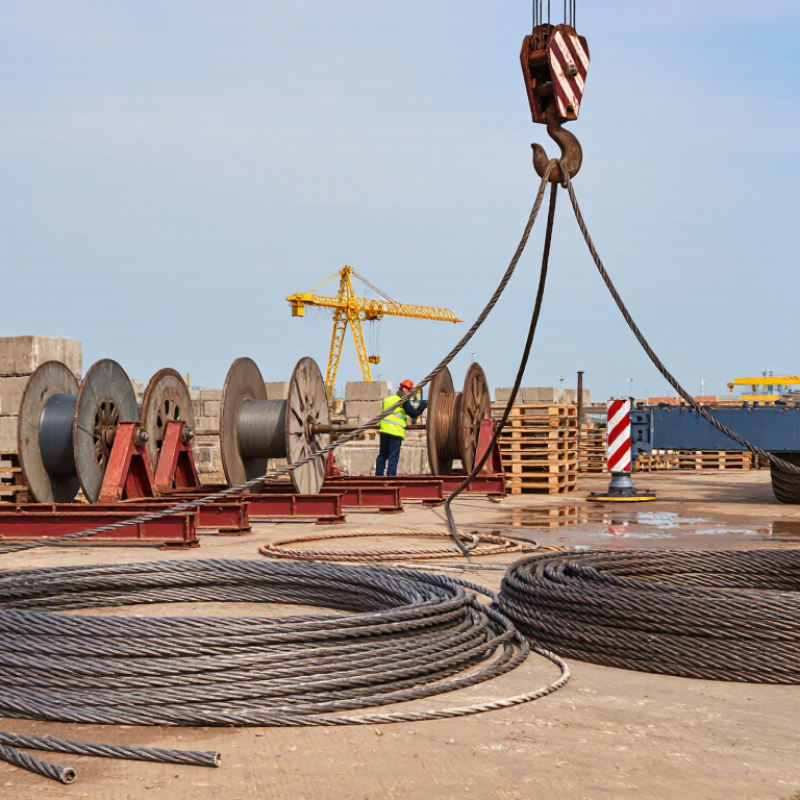
Heavy-duty lifting exposes crane rope to more than suspended weight. Repeated bending over sheaves, shock loading, abrasion, and corrosion can all shorten service life. A rope that looks sound from the ground may hide broken wires near a termination or inside a crowded drum. Inspect under realistic conditions. Get close, use adequate lighting, and check the rope’s full working length.
OSHA’s construction crane standard, 29 CFR 1926.1413, gives a measurable discard trigger: six randomly distributed broken wires in one rope lay, or three broken wires in one strand in one lay. These are not targets for continued use; apply the standard’s inspection and removal requirements. Small defects matter.
Match rope construction and rated capacity to the crane, reeving, drum, and duty cycle, then follow the manufacturer’s guidance and applicable standards. Welding Cable is designed for electrical service, not as a crane’s load-bearing hoist rope. That distinction matters. I would also avoid treating a calendar-based replacement interval as a substitute for inspection; actual wear depends on operating conditions and maintenance records.
A crane rope’s construction affects how it bends, resists wear, and handles crushing on a drum. The Wire Rope Technical Board’s Wire Rope Users Manual classifies 6×19 ropes as having 15–26 wires per strand, while 6×37 ropes have 27–49. More, finer wires generally make a rope more flexible around small sheaves. Fewer, thicker wires usually resist external abrasion better. That trade-off matters: a rope that bends easily may wear faster against a rough groove. Core type, rope grade, diameter, and reeving also affect strength, so construction alone cannot determine safe working capacity.
In field inspections, look for broken wires, flattened spots, corrosion, and uneven winding near the drum. These details can reveal problems before a rope looks obviously damaged. An independent capacity check should use the rope’s certified specifications and the crane’s operating requirements. Xlpe Cable is different: it can carry electrical power or control signals, but it is not a load-bearing hoist rope.
Tips: Match rope flexibility to sheave diameter and duty cycle. Check grooves and lubrication, too. Small defects matter. Record inspection findings consistently; in practice, rushed checks can miss early wear.
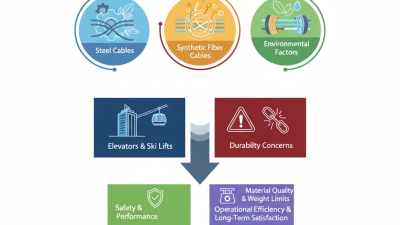
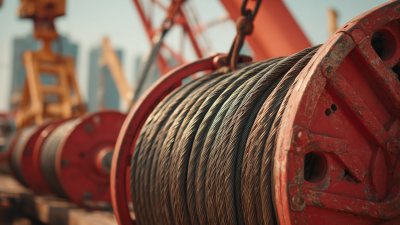
For heavy-duty lifting, wire rope is often chosen for its strength, abrasion resistance, and predictable behavior under load. Its steel strands handle contact with sheaves and rough surfaces well, but rope construction, diameter, and bending radius all affect performance. It is heavy. That matters when crews handle long lengths or make frequent changes.
Synthetic rope is much lighter and easier to position by hand. It can reduce handling strain, but sharp edges, heat, chemicals, and sunlight may damage some fibers. Protective sleeves help, though they do not erase every risk. I would not choose by weight alone; the exact fiber, splice, and manufacturer’s load data matter. Specialty crane cables may use particular constructions or fittings for a defined crane system. Compatibility needs checking, not guessing from appearance.
Before selecting any option, compare rated capacity, duty cycle, sheave requirements, and inspection criteria. Look for broken wires, abrasion, crushed sections, cuts, or unusual stiffness, and follow the equipment maker’s retirement guidance. The surrounding setup matters too. A Solar Cable carries electrical power; it is not a lifting line, despite the shared word “cable.” In practice, the best choice can be less obvious than a product chart suggests, especially where weather and repeated bending vary across the job.
Choosing crane cable starts with the crane’s reeving, not just its rated capacity. A rotation-resistant wire rope can reduce hook spin on tall lifts or multi-part hoists. It is not automatically the best choice; its construction must suit the drum, sheaves, and inspection plan. Small details matter.
Mobile cranes often need ropes that tolerate changing boom lengths and repeated winding. Overhead cranes may face frequent starts, stops, and tight sheave paths, making bending fatigue a key concern. Tower cranes can require long reeving runs where rotation control matters. For abrasive service, compacted strands may offer a smoother outer surface, but confirm compatibility with the crane’s specified groove dimensions. Do not guess.
Lifting conditions change the decision. Salt, moisture, dust, and heat can affect corrosion, lubrication, and wear. A wire core can resist crushing better on multilayer drums, while a fiber core may offer more flexibility in suitable applications. Check rope diameter, construction, lay, and minimum breaking force against the crane documentation and actual reeving. Then inspect for broken wires, flattening, corrosion, or kinks before use. Field judgment helps, but it can miss things; qualified inspection and the equipment maker’s guidance should decide uncertain cases.
| Cable Type or Construction | Typical Crane Design Match | Suitable Lifting Conditions | Key Advantages | Selection Checks |
|---|---|---|---|---|
| 6x19-class wire rope | General-purpose hoists, winches, and crane systems where the sheave and drum arrangement permits its bending characteristics. | Routine lifting with moderate-to-heavy loads and regular reeving. | Generally more resistant to external abrasion than finer-wire constructions of similar size. | Confirm the exact rope construction, minimum breaking force, diameter, and compatibility with the sheaves and drum. “6x19 class” covers multiple constructions, not one exact rope design. |
| 6x36-class wire rope | Mobile, overhead, and tower-crane hoists that need a flexible running rope and have compatible sheaves. | Frequent bending over sheaves, repeated hoisting cycles, and applications where flexibility is important. | Its many relatively small outer wires generally provide greater flexibility than coarser-wire constructions in the same classification range. | Smaller outer wires can be more vulnerable to abrasion and handling damage. Check the manufacturer's bending-fatigue guidance and the crane’s specified rope construction. |
| Rotation-resistant wire rope | Single-part or multi-part hoists where load rotation must be controlled, including some high-lift mobile and tower-crane arrangements. | Long lifts, freely suspended loads, or reeving systems prone to load spin. | Designed to reduce the tendency of a loaded rope to rotate and transfer twist to the load. | Use only where permitted by the crane manufacturer. These ropes can be sensitive to incorrect handling, bending, and installation; follow the specified reeving, end connections, and inspection requirements. |
| Compacted-strand wire rope | Heavy-duty hoists and cranes whose design allows a compacted rope construction and the associated rope dimensions. | High-load service where resistance to external wear and a compact rope profile are useful. | Compacting strands can produce a smoother outer surface and increase metallic cross-sectional area compared with some un-compacted constructions of similar diameter. | Compaction does not make a rope interchangeable with another construction. Verify the rated breaking force, fatigue performance, drum and sheave fit, and approved rope specification. |
| Galvanized wire rope | Outdoor mobile cranes, port cranes, and other equipment exposed to moisture or weather, when the crane specification allows it. | Atmospheres where corrosion protection is a consideration, including damp or coastal environments. | The zinc coating provides corrosion protection to the wires, subject to coating condition and exposure. | Galvanizing does not eliminate corrosion or inspection needs. Assess the actual environment, lubrication, coating wear, and the rope manufacturer’s recommendations. |
| Fiber-core wire rope | Light- to moderate-duty crane or winch applications specifically designed for a fiber core. | Service where flexibility is useful and operating temperatures and crushing loads are within the rope’s limits. | A fiber core can make a rope more flexible and retain lubricant within the core. | It generally offers less resistance to crushing and heat than an independent wire rope core (IWRC). Check the crane specification before using it for heavy-duty hoisting. |
| Independent wire rope core (IWRC) | Heavy-duty overhead, mobile, tower, and port-crane hoists specified for a steel core. | High loads, drum spooling, or operating conditions where additional resistance to crushing or heat is required. | The separate steel core supports the strands and generally provides better resistance to crushing and heat than a fiber core. | Confirm the exact rope design and compatibility with the sheaves, drum, and reeving. A steel core does not remove the need for correct lubrication and inspection. |
Important: Crane wire-rope selection must follow the crane manufacturer’s requirements and applicable regulations. Verify the rope construction, diameter, grade, minimum breaking force, reeving, sheave and drum compatibility, operating conditions, and inspection criteria before use.
Selecting a crane cable in 2026 starts with the actual duty cycle, not just the crane’s rated capacity. Check voltage, current, conductor size, and the cable’s permitted bending radius. A Four Core Cable may carry power or control signals, but four cores alone do not confirm suitability. Match the cable’s ratings to the equipment and its operating environment. Confirm details against the manufacturer’s technical data.
Look closely at how the cable moves. A festoon system, cable reel, and pendant control can impose different flexing and abrasion demands. Consider oil, dust, moisture, temperature changes, and contact with sharp edges. Inspect the route and connectors, too. A cable that meets electrical requirements may still wear quickly if it rubs against a beam. Not always obvious. A tidy drawing can hide a snag point.
Tips: Check the minimum bend radius and dynamic flex rating before installation. Leave enough slack for full crane travel, without creating loops that can catch. Record inspection findings and replace damaged sections promptly. If the cable’s use is unclear, pause and verify the specification; guessing is a poor maintenance plan.
Crane cable safety begins with a repeatable inspection, not a quick glance at the drum. Check for broken wires, corrosion, crushed sections, kinks, birdcaging, and uneven winding. Look closely where the rope passes over sheaves; damage can hide in grooves or beneath grease. Small clues matter. OSHA’s overhead-crane rule, 29 CFR 1910.179(m)(1), calls for monthly inspection of running ropes and records of those inspections. It identifies measurable discard triggers: six randomly distributed broken wires in one rope lay, or three broken wires in one strand within one lay. These thresholds are useful, but they do not replace a competent person’s judgment.
Keep ropes clean and lubricated according to the crane and rope manufacturers’ instructions, and check that sheaves and drums are correctly aligned. A rope rubbing a flange may wear faster than expected. That detail is easy to overlook during a busy shift. Before replacement, lower and secure the load, isolate the crane, and follow site lockout procedures. Use a qualified technician to confirm rope diameter, construction, grade, length, and compatibility with the drum and sheaves. Do not guess. Incorrect reeving or a mismatched rope can create new hazards before the crane lifts anything. After installation, verify reeving, seating, and operation under controlled conditions; document the change and set the next inspection date. A checklist helps, but rushed checks still miss things.
Wire-rope construction comparison: the chart shows the number of strands indicated by the first number in each construction designation.
Safe use: Strand count alone does not determine a rope’s lifting capacity or suitability. Select rope to match the crane, reeving, load, and manufacturer’s specifications. Inspect before use and at appropriate intervals; remove damaged rope from service according to applicable regulations and the equipment manufacturer’s criteria.
More, finer wires usually bend more easily around small sheaves. Fewer, thicker wires often resist surface abrasion better. Small clues matter.
No. A flexible rope may wear faster in a rough or poorly matched groove. Check the sheave condition and rope duty.
No. Core type, grade, diameter, reeving, and certified specifications also matter. Verify the full setup, not one detail.
Check for broken wires, corrosion, flat spots, kinks, crushed sections, and uneven drum winding. Look closely near sheaves.
Use a consistent inspection schedule and keep records. Inspection intervals depend on the equipment and its operating conditions.
No. Electrical cables carry power or control signals; hoist ropes carry loads. They are not interchangeable.
Match voltage, current, conductor size, bend radius, and flex rating to the equipment. Check the route for oil, dust, moisture, and sharp edges. A neat drawing can still miss a snag point.
Secure the load, isolate the crane, and follow site procedures. Have a qualified technician confirm rope size, construction, grade, length, and compatibility. Guessing is risky.
Keep ropes clean and lubricated as instructed. Check drum and sheave alignment, leave suitable travel slack, and record defects. Rushed checks still miss things.
Choosing the right Crane Cable for heavy-duty lifting requires more than comparing rated strength. Cable construction—including material, strand arrangement, and core design—affects load capacity, flexibility, fatigue resistance, and performance around sheaves and drums. Wire rope is a common choice for demanding lifting, while synthetic and specialty cables may suit applications where weight, handling, or operating conditions call for different characteristics. The best option depends on the crane design, expected loads, lift frequency, environment, and how the cable travels through the system.
A careful selection process should consider compatibility, working capacity, durability, and the manufacturer’s specifications, rather than relying on a single factor. Regular inspection and maintenance help identify wear, deformation, corrosion, or other signs that a cable may need attention. When replacement is required, using a suitable cable and following established installation and safety procedures can help support reliable crane operation and reduce avoidable risks.