Choosing the best Direct Burial Copper Wire in China isn’t just about comparing prices or reading the label. You really need to think about whether the cable can handle moisture, soil pressure, temperature swings, and accidental impacts over many years. Sometimes, a cable looks fine during installation but ends up failing when buried underground in wet conditions—that’s a nightmare you want to avoid.
John C. Wiles, a well-known safety educator in the electrical field, once said, “The code is the minimum standard, not the design goal.” That’s a good reminder when you’re checking out Chinese manufacturers. It's smart to look into stuff like how pure the conductor is, the thickness of the insulation, voltage ratings, grounding methods, and if it can stand up to sunlight and water. Always ask for factory test reports, third-party certifications, batch numbers, and clear traceability info — details really matter here.
Also, pay close attention to the soil where the cable will be buried.
A cable made for dry conditions might not cut it in coastal areas or chemically aggressive soils. Make sure the insulation is made from durable materials like PVC or XLPE, and don’t just settle for vague claims like “premium quality” without details. Find out how the manufacturer tests for elongation, insulation resistance, and long-term exposure to water. If they just say “we use top-quality materials,” you should be suspicious—ask for proof.
Experience teaches us that the cheapest Direct Burial Copper Wire often isn’t the real bargain once you account for excavation and replacement costs down the line. But at the same time, paying more doesn’t automatically guarantee better quality engineering. Sometimes, suppliers might not share complete documentation or have inconsistent batches—that’s something to keep in mind.
This guide is all about helping you understand what to look for when choosing a cable for Chinese projects—things like conductor size, insulation performance, proper compliance documents, supplier checks, packaging, and delivery controls. It’s not about promising a perfect choice, but rather about giving you smarter questions to ask before that cable disappears into the ground.
Define Direct Burial Copper Wire and Its Main Applications
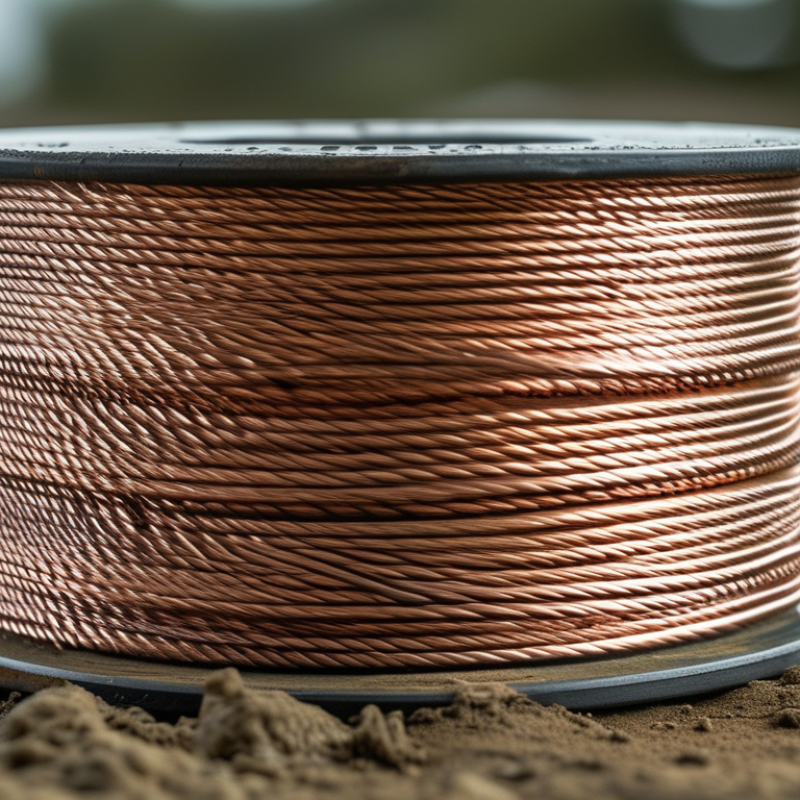
Direct Burial Wire is insulated copper cable designed for underground installation without conduit in suitable conditions. Its jacket resists moisture, soil contact, and mechanical stress. The copper conductor carries electricity efficiently over long distances. Cable construction still matters. A thick jacket alone does not guarantee reliable burial performance.
In China, common applications include underground power feeders, garden lighting, agricultural pumps, security systems, and control circuits. Contractors also use it between buildings, where trench access is limited. The International Copper Study Group reported refined copper usage of about 26.5 million tonnes in 2024. The International Energy Agency also identifies copper as a key material for expanding electricity networks. Demand is growing, but installation mistakes remain common. Sharp stones can damage insulation. Standing water can expose weak sealing points. A tidy cable route may still fail.
Tips: Check conductor size, insulation rating, temperature range, and burial depth before purchasing. Confirm compliance with applicable GB or IEC requirements. Ask for test reports, production traceability, and sample cross-sections. Copper purity matters, but it is not the only quality indicator. Flexible cable can ease installation, while rigid cable may hold shape better. Consider soil acidity and expected load. One simple selection chart cannot cover every site.
Identify Project Requirements for Voltage, Load, Distance, and Soil Conditions
Choosing direct burial copper wire in China starts with the project brief, not the cable catalog. Record the system voltage, operating current, starting current, circuit length, and allowable voltage drop. A common design target is three percent for branch circuits, but motor systems may need tighter control during startup. IEC 60287 calculates cable ampacity using conductor losses, insulation temperature, installation depth, and surrounding thermal conditions. Copper resistivity is approximately 0.01724 Ω·mm²/m at 20°C, according to IEC 60228 data. Small resistance changes become expensive over long routes.
Distance matters more than many buyers expect. Measure the one-way route, then calculate the complete circuit loop. For a 100-meter run, a 10% length error can noticeably change voltage-drop results. Check continuous load, inrush current, harmonics, and future capacity. A cable passing today’s test may fail after equipment expansion. It happens.
Soil conditions need equal attention. Wet clay usually removes heat better than dry sand, while rocky backfill can create air gaps around the cable. IEC 60287 requires thermal resistivity inputs; generic soil assumptions can therefore produce misleading ampacity. Field surveys should record moisture, burial depth, seasonal freezing, drainage, and nearby heat sources. The International Electrotechnical Commission also recommends applying installation correction factors rather than relying on a single catalog rating. In practice, I would request thermal-resistivity testing for long, heavily loaded routes. Skipping that test may reduce the purchase price, but it weakens the design evidence.
How to Choose the Best Direct Burial Copper Wire in China? - Identify Project Requirements for Voltage, Load, Distance, and Soil Conditions
| Project Profile | System Voltage | Design Load | One-Way Distance | Soil and Installation Conditions | Recommended Copper Size* | Approx. 75°C Ampacity* | Estimated Voltage Drop | Selection Rationale |
| Garden Lighting and Small Pump | 120 V, single-phase | 15 A | 150 ft / 46 m | Dry, well-drained sandy soil; non-vehicle area; cable installed below the local minimum burial depth. | 8 AWG copper | 50 A | Approximately 3.2%
(about 3.8 V) | The larger conductor compensates for the long circuit length and helps reduce voltage loss during pump starting. |
| Residential EV Charger | 240 V, single-phase | 30 A continuous | 250 ft / 76 m | Moist clay soil with moderate drainage; residential driveway crossing; mechanical protection may be required. | 6 AWG copper | 65 A | Approximately 2.7%
(about 6.5 V) | The conductor is selected for continuous operation, long distance, and improved charging performance under sustained load. |
| Agricultural Irrigation Motor | 240 V, three-phase | 50 A | 500 ft / 152 m | Wet, compacted clay soil; high groundwater risk; route should use wet-location-rated insulation and corrosion-resistant connections. | 1 AWG copper | 130 A | Approximately 3.2%
(about 7.7 V) | The large cross-section limits voltage drop over the extended feeder and provides additional thermal margin in demanding soil conditions. |
| Commercial HVAC Feeder | 480 V, three-phase | 75 A | 400 ft / 122 m | Rocky, well-drained soil; heavy construction traffic; rigid conduit or approved concrete-encased protection may be appropriate. | 2 AWG copper | 115 A | Approximately 2.4%
(about 11.7 V) | The conductor balances ampacity, long-distance voltage-drop control, and protection against mechanical damage. |
| Small Industrial Distribution Feeder | 480 V, three-phase | 100 A | 300 ft / 91 m | Slightly corrosive soil near a coastal or industrial area; high-quality sealing, grounding, and corrosion-resistant hardware are required. | 1/0 AWG copper | 150 A | Approximately 1.7%
(about 8.7 V) | The larger conductor provides lower impedance and additional thermal capacity for variable industrial loads and future expansion. |
Technical notes:The ampacity figures are typical planning values for copper conductors using a 75°C ampacity reference and are not a substitute for a local electrical design. Final sizing must account for conductor insulation, ambient and soil temperature, conductor grouping, termination ratings, continuous-load rules, fault-current requirements, and applicable Chinese or project-specific electrical codes. Direct-burial conductors must be specifically approved for wet locations and direct burial; ordinary
Indoor Wire should not be buried directly. Voltage-drop estimates use approximate copper resistance and a 3% branch-circuit design target where practical.
Compare Copper Conductors, Insulation Types, and Burial Ratings
Choosing the best Direct Burial Low Voltage Wire in China starts with the copper conductor. Solid copper offers stable resistance and simple termination. Stranded copper bends more easily around corners and cabinet entries. Under IEC 60228, a 2.5 mm² copper conductor has a maximum resistance near 7.41 ohms per kilometer at 20°C. That figure matters when long runs feed outdoor lighting, cameras, or irrigation controls.
Insulation decides whether the cable survives underground moisture, soil pressure, and temperature changes. PVC is economical and widely used, but XLPE usually provides better thermal performance and stronger aging resistance. Polyethylene insulation can resist water effectively, yet the complete cable still needs suitable moisture barriers. A burial marking alone is not enough. Check the manufacturer’s tested voltage, conductor temperature, crush resistance, and minimum bending radius. The IEC 60502 series provides useful reference points for power-cable construction and testing.
Burial Ratings and Material Quality Burial ratings deserve careful attention. Direct-burial cable should be identified for soil contact, not merely for outdoor exposure or conduit installation. The U.S. National Electrical Code separates wet-location suitability from general outdoor use, and this distinction is practical in China’s rainy coastal regions. The 2024 U.S. Geological Survey Mineral Commodity Summaries reported about 22 million tonnes of global mined copper production in 2023, but material availability does not guarantee conductor quality. Ask for resistance reports, insulation test records, and batch traceability. I would not choose by price alone. Soil conditions are often underestimated. Even good calculations can miss drainage, movement, or careless backfilling.
Check Chinese Manufacturing Standards, Certifications, and Quality Controls
Choosing the best direct burial copper wire in China starts with standards, not catalogue photos. Ask the factory which GB/T requirements apply to the construction. GB/T 3956 covers conductor resistance and construction classes, while GB/T 12706 addresses many insulated power cables. The exact standard depends on voltage, insulation, and sheath design.
For a product listed as 2 2 2 4 Direct Burial Wire, request the conductor size, copper grade, and resistance test at 20°C. A trustworthy manufacturer should provide batch reports, not only a general certificate. Check applicable China Compulsory Certification scope, plus independent test evidence for insulation thickness, voltage withstand, tensile strength, ageing, and water penetration. Test samples should carry matching lot numbers.
Industry demand adds pressure. The International Energy Agency’s Global Critical Minerals Outlook 2024 projects copper demand for clean-energy technologies to rise from about 5.7 million tonnes in 2022 to 10.1 million tonnes by 2030. That growth makes material traceability more important. I would also inspect a cut cable personally: copper strands should look even, compact, and clean. A glossy sheath proves little. Some suppliers may pass a sample test yet change materials later. That is the uncomfortable gap. Use factory audits, sealed samples, incoming-copper records, and third-party retesting before approval.
How to Choose the Best Direct Burial Copper Wire in China?
Compare the applicable voltage scope of key Chinese and international cable standards before reviewing copper conductor construction, insulation, sheath durability, type-test reports, and required certifications.
How to read this chart: The values show the upper rated-voltage limit stated in each standard’s scope, not a product-quality score. For direct-burial applications, confirm that the selected cable’s construction and test reports match the installation environment, including moisture, soil pressure, mechanical protection, flame performance, and conductor resistance.
References: GB/T 12706.1-2020, IEC 60502-1, and GB/T 5023.3-2008. Certification and acceptance requirements should be confirmed against the cable’s exact product category and project specification.
Evaluate Supplier Capabilities, Product Specifications, and Custom Options
Choosing direct burial copper wire in China requires more than comparing prices. Evaluate the supplier’s production capability, quality controls, and communication habits. A reliable factory should explain its copper sourcing, conductor stranding, insulation process, and testing equipment clearly. Ask for recent test reports, batch records, and sample approval documents. A factory tour can help, but it is not complete proof.
Product specifications must match the installation environment. Check conductor size, copper purity, insulation material, voltage rating, temperature range, and moisture resistance. Confirm protection against soil pressure, sunlight, and mechanical damage. Request samples with printed markings and inspect the jacket for cracks, uneven thickness, or poor adhesion. Small defects matter underground. They become expensive later.
Custom options may include conductor gauges, jacket colors, cable markings, drum lengths, packaging, and export documentation. Discuss minimum order quantities and realistic lead times before approving a drawing. Ask whether the supplier can maintain the same construction across repeated batches. Pilot orders are safer than immediate large purchases. Still, customization can increase cost and delay production. I once saw specifications change too late, creating unnecessary rework. Clear drawings and written confirmations prevent that mistake. A capable supplier should also respond with measured evidence, not only confident promises.
Calculate Total Cost, Delivery Risks, and Long-Term Performance
Choosing direct burial copper wire in China requires more than comparing the factory quotation.
Calculate the full installed cost, including conductor weight, insulation, export packing, freight, insurance, trenching, testing, and future repairs. For a 4 3 Wire Direct Burial configuration, request the copper mass per meter and resistance at 20°C. The Copper Development Association identifies annealed copper as having approximately 100% IACS conductivity. That figure helps verify whether a low price hides thinner conductors.
Delivery risk can change the project budget quickly. UNCTAD’s Review of Maritime Transport 2024 reported major shipping disruption and longer routes after vessels avoided the Red Sea. Ask suppliers for production lead time, port options, moisture-proof packaging, and inspection records before shipment. Include at least one realistic schedule buffer. A spreadsheet may look precise, but it can still ignore customs delays or damaged cable drums.
Long-term performance depends on soil conditions, installation quality, and water resistance. Check the applicable IEC or national requirements for burial depth, insulation ratings, grounding, and joint protection. Copper’s conductivity reduces resistive losses, but poor connections create heat and maintenance costs. I would also compare lifecycle cost over 20 or 30 years, not only purchase price. My own estimate would remain provisional until test certificates, cable dimensions, and site soil data are verified. Small omissions become expensive underground.
1500V PV/PV1-F TUV Tinned Copper XLPO Solar Cable: Insights from IEA PVPS Trends 2024 and NREL Reports
The expansion of high-voltage photovoltaic systems has increased demand for dependable cables that support greater efficiency, longer string lengths, and lower installation losses. A 1500V PV/PV1-F Solar Cable with a tinned copper conductor and XLPO insulation is designed for these requirements. Its flexible construction supports quick routing between modules, combiner boxes, inverters, and other system components, while the tinned surface helps improve resistance to oxidation in humid or coastal environments.
This type of cable can connect solar panels both inside and outside buildings, where it may face intense sunlight, rain, wind, temperature fluctuations, and occasional mechanical stress. XLPO insulation provides strong resistance to ultraviolet exposure, heat, moisture, and aging, helping the cable maintain stable electrical performance throughout the operating life of a photovoltaic installation. The 1500V rating also enables modern systems to handle higher operating voltages, potentially reducing current-related losses and the amount of cable required for large arrays.
As photovoltaic deployment continues to move toward larger utility, commercial, and distributed projects, cable quality remains important for safety, maintainability, and long-term energy yield. Proper sizing, secure connectors, suitable bend radii, and correct routing are essential when installing PV/PV1-F cables in rooftop, ground-mounted, and building-integrated applications.
FAQS
Record voltage, operating current, starting current, route length, and allowable voltage drop. Measure twice. Also consider future equipment expansion.
Measure the one-way route, then calculate the complete circuit loop. A 100-meter route with a 10% error can distort the result. Small mistakes matter.
Wet clay usually removes heat better than dry sand. Rocky backfill may leave air gaps around the cable. Seasonal freezing and nearby heat sources also matter.
Yes, especially for long, heavily loaded routes. Generic soil assumptions can produce misleading ampacity results. The test costs more, but skipping it weakens the design evidence.
Request copper sourcing details, conductor construction, insulation methods, and testing equipment information. Ask for recent test reports, batch records, and sample approval documents. Confidence alone is not evidence.
Check conductor size, copper conductivity, insulation material, voltage rating, temperature range, and moisture resistance. Also inspect protection against soil pressure, sunlight, and mechanical damage. Small jacket cracks can become expensive underground.
Custom gauges, markings, drum lengths, colors, and packaging can support project needs. However, customization may increase cost and delay production. Clear drawings prevent rework.
Include conductor weight, insulation, packing, freight, insurance, trenching, testing, and future repairs. Request copper mass per meter and resistance at 20°C. A low quotation can hide thinner conductors.
Confirm production time, port options, moisture-proof packaging, and pre-shipment inspection records. Allow a realistic schedule buffer for customs delays or damaged cable drums. Spreadsheets can still miss practical problems.
Review burial depth, insulation ratings, grounding, joint protection, soil conditions, and installation quality. Compare lifecycle costs over 20 or 30 years. My estimate stays provisional until site data and test certificates are verified.
Conclusion
Choosing the best Direct Burial Copper Wire in China requires more than comparing prices. Start by defining the project’s purpose, such as residential power distribution, outdoor lighting, industrial equipment, or underground connections. Review the required voltage, current load, cable distance, installation depth, and soil conditions, including moisture, acidity, temperature, and exposure to mechanical pressure. These factors determine the suitable conductor size, copper quality, insulation material, and burial rating.
Next, evaluate manufacturers through their production standards, certifications, testing procedures, and quality-control systems. Confirm whether the supplier can provide clear technical specifications, sample testing, customized lengths, insulation options, packaging, and documentation. A reliable decision should also consider total cost, including transportation, installation, maintenance, delivery schedules, and possible replacement risks. By balancing electrical performance, environmental durability, supplier capability, and long-term value, buyers can select a safe and dependable Direct Burial Copper Wire solution for their specific project.