So, you're on the hunt for a professional cable manufacturer in China? Don't just compare prices – that's only half the story. You've got to ask for evidence, real proof that they can deliver. I mean, anyone can claim to be professional, but you need to see it for yourself.
So, a good supplier needs to really get what you're building, know your technical drawings, and understand where it'll be used. You should definitely ask them about the conductor material, insulation type, voltage rating, the temperature range it can handle, and the bend radius. Now, if you're dealing with a Welding Cable, you've got to pay extra attention to how flexible it is and how well it resists heat. Honestly, a cable might look great on the outside but then completely fail when it's moved around over and over. That's a sneaky detail that a lot of people overlook.
You know, practical experience really counts. Don't just take their word for it – ask for production samples, test reports, and clear specs. I mean, you've got to check things like copper purity, how the conductors are stranded, insulation thickness, and the finished diameter. Independent testing can help verify those claims, which is always a good idea. And it's worth digging into their ISO 9001 procedures, factory equipment, and how they handle batch traceability. Sure, photos are nice, but an actual audit tells you a lot more.
Don't just stop at the quotation, alright? You've got to dig deeper. Look at things like minimum order quantities, lead times, packaging, warranty terms, and what kind of after-sales support they offer. A trustworthy manufacturer will be open about problems rather than promising you the moon. And honestly, that cheapest bid? It can end up costing you more if there are delays or if you get rejected goods. I've seen plenty of evaluations that get way too fixated on certificates. I mean, sure, certificates are important, but what really matters is that they can deliver consistent quality. That's the real test.
When you're scouting suppliers, you really want someone who doesn't just talk a good game but actually gives you concrete numbers when you ask technical questions. Find out if they handle everything in-house—extrusion, stranding, testing, final inspection—you know, the whole shebang. And don't forget to ask what they do when cables don't meet spec. Honestly, the way they answer that can tell you a ton. Sometimes the little details are where the big gaps show up.
Look, no supplier is perfect, right? So when you're doing your review, you've gotta stay careful, keep good documentation, and be realistic about what's possible. If you've got verified quality, experience that actually fits, and communication you can rely on, then you're well on your way to a safer and more stable cable supply chain from China—believe me, it makes a difference.
Choosing the best professional cable manufacturer in China starts with a precise project definition. Vague requests often produce inconsistent quotations and unsuitable samples. Write down the conductor material, cross-sectional area, core count, voltage rating, and expected current. Include insulation and jacket materials. PVC, XLPE, and other compounds perform differently in heat, moisture, and abrasion.
Think about the installation site. Will the cable run outdoors, underground, inside machinery, or near moving parts? State the operating temperature, bending radius, shielding needs, flame performance, and exposure to oil or chemicals. Cable length, annual quantity, connector requirements, and delivery schedule also affect production planning. Small details matter here.
A practical specification should include drawings, applicable testing standards, labeling rules, and packaging requirements. Ask manufacturers whether they can provide conductor resistance tests, insulation tests, dimensional reports, and sample records. Factory experience becomes clearer when technical staff ask relevant questions instead of sending only a price. Request a sample made with the proposed materials, not a similar stock cable. Check its markings, flexibility, outer diameter, and documentation.
My early checklists were too short. I once overlooked bending frequency, which later caused unnecessary redesign work. That mistake taught me to confirm real installation conditions with engineers and installers. A reliable manufacturer should accept technical revisions, explain limitations, and record every agreed parameter. Lead time deserves scrutiny too. A low quotation means little if testing, tooling, or material approval causes delays.
A professional cable manufacturer should offer more than a long product catalog. Check whether its range matches your actual project needs, including power cables, control cables, communication cables, Flexible Wires, and specialized assemblies. Ask for detailed datasheets, not general brochures. These documents should identify conductor materials, insulation types, voltage ratings, temperature limits, shielding, and available sizes. A supplier that cannot explain these details may be reselling products.
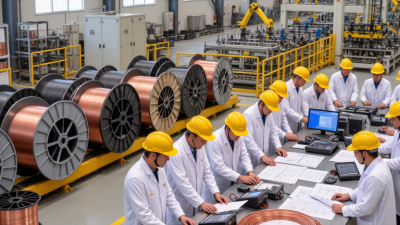
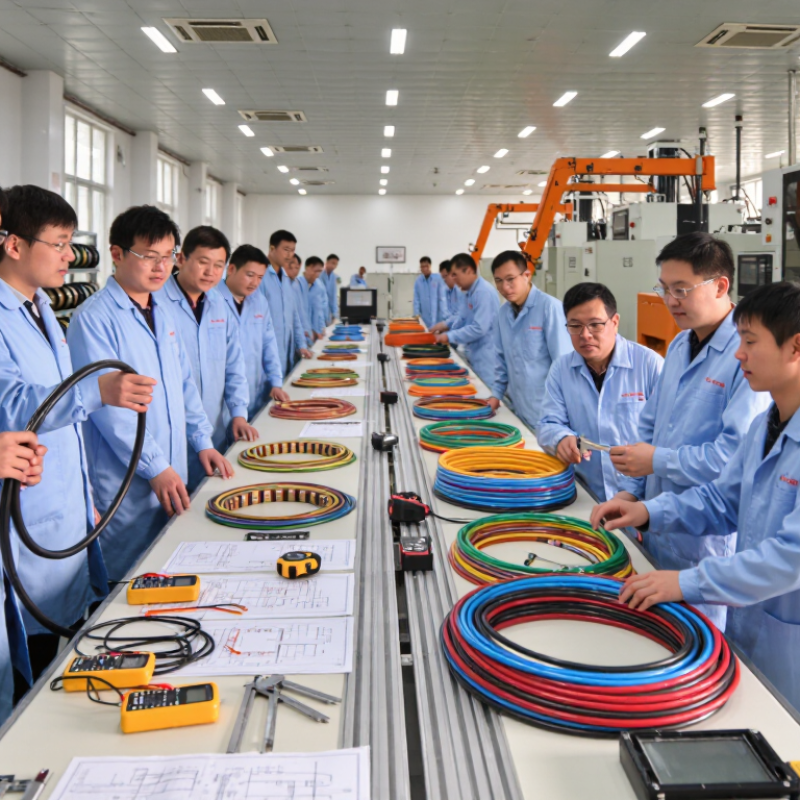
Technical expertise becomes clearer through practical questions. Ask how the manufacturer selects insulation for outdoor exposure, repeated bending, heat, moisture, or chemical contact. Request test reports covering electrical performance, flame behavior, dimensional accuracy, and aging resistance. Visit the production site if possible. Observe cable stranding, extrusion lines, marking equipment, and final inspection stations. A clean laboratory with calibrated testing instruments matters.
Real project experience is useful. Request samples close to your intended specification, then compare flexibility, surface finish, conductor consistency, and printed markings. Speak with an engineer, not only a sales representative. Their answers should be specific and measurable. Still, do not trust polished documents alone. I have seen excellent samples hide weak batch control, and one inspection cannot prove long-term consistency. Ask how rejected reels are recorded, how traceability works, and how technical changes are approved. A capable manufacturer welcomes these questions, even when its process is not perfect.
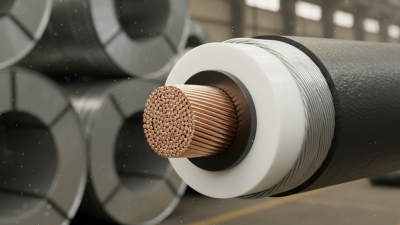
Choosing a professional cable manufacturer in China starts with materials, not brochures. For Xlpe Cable, request conductor details, including copper purity, aluminium grade, and IEC 60228 conductor class. Check the insulation compound’s cross-linking method and temperature rating. A reliable factory should explain its semiconductive layers, metallic screen, sheath, and water-blocking design clearly.
Construction control matters under real installation stress. Ask for production records showing conductor resistance, insulation eccentricity, spark testing, and curing temperature. IEC 60502-1 and IEC 60502-2 provide useful benchmarks for low- and medium-voltage cables. The International Energy Agency reported in Electricity Grids and Secure Energy Transitions that over 80 million kilometres of grids may need to be added or refurbished by 2040. Demand is rising. Weak process control will become expensive.
Tips: Visit the production line if possible. Witness routine tests and request type-test reports from an independent laboratory. ISO’s 2022 Survey recorded more than 1.26 million ISO 9001 certificates worldwide, but certification alone does not prove cable performance. Check calibration records, batch traceability, and failed-test handling. A professional supplier should show evidence, not just certificates. Ask for partial-discharge, elongation, aging, and sheath tests when the application requires them. Small gaps remain possible, even in mature factories. That is worth challenging.
Choosing the Best Professional Cable Manufacturer in China
A reliable cable manufacturer should provide current certifications, complete test reports, and traceable compliance records. Do not accept a certificate image alone. Check its issuing body, validity period, factory address, and covered product range. A document for control cables may not apply to Solar Cable products.
Ask whether the manufacturer follows relevant IEC testing standards. Depending on the cable type, testing may include conductor resistance, insulation thickness, voltage withstand, flame performance, aging, and UV exposure. Request reports linked to a specific batch or sample. Clear report numbers matter. So does laboratory independence. Factory quality systems, such as ISO 9001, can support consistency, but they cannot replace product testing. I have seen suppliers present polished files with missing test dates. That detail deserves careful review.
Tips: Request raw test data, material declarations, calibration records, and a sample inspection before placing a large order. Compare the stated cable structure with the delivered sample, including conductor strands, jacket markings, and package labels. Ask for a written compliance matrix matching each requirement to evidence. Keep communication records. Even experienced buyers miss small inconsistencies, especially when documents use unfamiliar technical wording. A practical factory audit can reveal storage problems, unmarked materials, or poor batch separation. Reliability grows from evidence, not confident promises.
| Evaluation Dimension | Relevant Standard or Requirement | What a Professional Manufacturer Should Provide | Verification Method | Priority |
|---|---|---|---|---|
| Quality management system | ISO 9001:2015 | A valid certificate covering cable design, manufacturing, testing, and quality control activities. | Check the certificate number, scope, issue date, expiry date, and certification body through the issuing body’s verification system. | Critical |
| Laboratory competence | ISO/IEC 17025:2017 | Testing performed by a competent internal laboratory or an independent laboratory accredited for the relevant methods. | Review the laboratory accreditation scope, test methods, equipment calibration records, and test report authorization. | Critical |
| Conductor construction | IEC 60228 or the applicable national equivalent | Declared conductor class, material, nominal cross-sectional area, resistance, and stranding construction. | Compare the product datasheet and routine test results with the applicable conductor requirements. | Critical |
| Insulation and sheath performance | The applicable IEC, EN, GB/T, or project-specific cable standard | Material type, rated voltage, operating temperature, minimum thickness, tensile strength, elongation, and ageing performance. | Request type-test reports, material specifications, production inspection records, and sample measurements. | Critical |
| Flame-retardant performance | IEC 60332-1-2 for vertical flame propagation of a single insulated wire or cable | A test report identifying the exact cable construction, sample size, test method, result, and test date. | Confirm that the report applies to the offered product and not only to a similar cable design. | High |
| Low-smoke and halogen-acid gas properties | IEC 60754-1, IEC 60754-2, and IEC 61034-2 where LSZH performance is specified | Separate reports for halogen-acid gas content, pH and conductivity, and smoke density where required. | Check the reported values, test methods, cable materials, and whether the testing covers the complete finished cable. | High |
| Electrical routine testing | The applicable product standard; commonly includes conductor resistance, insulation resistance, and voltage withstand tests | A documented routine-test plan with acceptance criteria, test frequency, equipment identification, and traceable results. | Request sample routine-test records linked to production batches and cable drum numbers. | Critical |
| Type testing and design validation | The complete applicable cable specification and customer technical requirements | Independent or accredited type-test reports covering the same conductor, insulation, shielding, armor, sheath, and rated voltage configuration. | Compare the tested construction with the proposed bill of materials and approved technical datasheet. | Critical |
| Restricted substances | RoHS Directive 2011/65/EU and applicable amendment requirements | A material declaration and supporting test evidence for restricted substances in the cable and relevant components. | Check the declaration date, product scope, test methods, and material coverage, including insulation, sheath, fillers, and metal parts. | High |
| Chemical substance compliance | REACH Regulation (EC) No. 1907/2006, where applicable | A current declaration addressing substances of very high concern and applicable communication obligations. | Verify the declaration against the current restricted-substance list and the actual material composition. | High |
| Fire classification for construction applications | EN 50575 and the applicable Construction Products Regulation requirements in the destination market | Declared reaction-to-fire classification, performance documentation, and required conformity assessment records. | Confirm that the classification applies to the exact cable family, installation use, and destination-market requirements. | Project-specific |
| Regulatory and market-access certification | Applicable destination-market certification, marking, and conformity requirements | Valid certificates or declarations matching the product type, voltage range, destination country, and intended application. | Verify the certificate scope and status through the relevant official or accredited certification database. | Critical |
| Material traceability | Documented lot-control and production-traceability procedures | Traceability from conductor and compound batches to production orders, inspection records, and final cable drums. | Request a sample certificate of conformity and verify that batch numbers can be traced through production records. | Critical |
| Calibration and measurement control | ISO 9001 measurement-control requirements and relevant calibration practices | Current calibration certificates for resistance bridges, high-voltage testers, dimensional gauges, ovens, and other critical equipment. | Check calibration status, reference standards, uncertainty where relevant, and next calibration dates. | High |
| Final inspection and shipping documentation | Approved inspection and test plan agreed with the purchaser | Certificate of conformity, final inspection report, packing list, drum schedule, datasheet, and applicable test reports. | Ensure documents identify the exact product, batch, length, rated voltage, applicable standard, and inspection status. | High |
| Audit transparency and corrective action | Supplier audit procedures, nonconformity control, and corrective-action records | Willingness to support factory audits, provide objective evidence, and document root-cause and corrective-action activities. | Review audit findings, response times, corrective-action effectiveness, and records of recurring defects. | High |
Choosing the best professional cable manufacturer in China requires more than comparing a factory’s website. Production capacity should match your order size and delivery schedule. Ask how many extrusion lines are operating, not just how many are installed. A factory may claim high output, yet maintenance or seasonal demand can reduce actual capacity. Request recent production records, staffing details, and sample inspection reports.
Customization is equally important. For a Four Core Cable, confirm conductor material, insulation thickness, jacket color, printing, shielding, and packaging. Ask whether tooling is included in the quotation. A small design change can affect both testing and lead time. Before mass production, require a sample with clear specifications. It may feel slower, but it can prevent expensive rework. I have learned that written details often expose gaps that calls hide.
Pricing should be compared line by line. Check copper grade, tolerance, testing, packing, tooling, and shipping terms. The cheapest quote may omit critical quality controls. Lead time also needs careful review. Separate sample time, tooling time, production time, and inspection time. Ask what happens if materials arrive late or a batch fails testing. A reliable manufacturer provides realistic dates, progress updates, and traceable quality records. Some capacity figures are optimistic. Challenge them politely. That conversation can reveal more than a polished sales presentation.
Benchmark comparison of production capacity, customization, pricing, and lead times
The chart uses a 0–100 benchmark score, where a higher score indicates stronger overall capability. Production capacity is benchmarked by monthly output, customization by configurable cable options, pricing by relative cost index, and lead times by typical delivery speed. Large integrated manufacturers generally offer higher capacity and faster delivery, while specialized mid-size suppliers may provide a stronger balance of flexibility and cost.
Choosing a professional cable manufacturer in China starts with communication, not a polished website. During a sourcing project, I requested an Instrumentation Cable quote with drawings, conductor size, insulation, shielding, and delivery targets. The supplier replied with clear questions and a marked-up specification. That response showed engineering discipline. Vague answers created delays later. Ask who handles technical changes, how quickly samples ship, and whether engineers review English documents. Keep every revision in writing. Phone promises are easy to forget.
Samples should represent production, not a hand-finished display piece. Request several meters from the intended material batch, plus an inspection report. Check jacket diameter, print legibility, flexibility, shielding coverage, and connector fit. If the cable enters a control cabinet, bend it repeatedly near the gland. Small cracks matter. Compare the sample with drawings and approved tolerances. Request continuity, insulation resistance, and tensile test records when relevant. However, a report without batch numbers is weak evidence. This is often missed.
Warranty language deserves the same attention as price. Confirm the coverage period, excluded conditions, claim evidence, replacement timing, and shipping responsibility. A dependable manufacturer explains failure investigations, not merely “full support.” Ask for a named after-sales contact and an escalation path. Test the process with a minor question before placing a large order. Delayed replies reveal more than sales presentations. No supplier is perfect. My own mistake was accepting a broad warranty clause without defining repair time. Clear terms protect both sides and make future cooperation measurable.
German-standard 0.6/1 kV NYY and NAYY cables are designed for fixed power distribution and durable installation. NYY generally uses copper conductors, while NAYY uses aluminum conductors, offering a lighter and often more economical option for larger power circuits. Both cable types typically feature insulated cores and a robust PVC outer sheath, providing protection against moisture, mechanical stress, and common environmental conditions.
These cables are suitable for cable ducts, power stations, industrial facilities, distribution boards, and subscriber networks. They may be installed outdoors, indoors, underground, or underwater when the installation conditions comply with the applicable requirements. NYY cables can also be embedded in brickwork and concrete, but they should not be used in concrete exposed to continuous shaking, vibration, or compression. Their fixed-installation design makes them appropriate for supplying buildings, machinery, infrastructure, and distribution equipment.
Selection should consider conductor material, cross-sectional area, voltage drop, permitted current, route length, ambient temperature, and mechanical demands. Copper conductors are typically preferred where compact dimensions, high conductivity, or easier termination is important, while aluminum conductors can be advantageous for long runs and larger cross-sections when suitable terminals and installation practices are provided. The cable size should be verified against the expected load, installation method, short-circuit requirements, and local electrical regulations before installation.
Request current certifications, complete test reports, material declarations, and calibration records. Check the issuing body, validity date, factory address, and product scope. A certificate image alone proves very little.
No. A document for control cables may not cover solar or four-core cables. Match each certificate to the exact structure, application, and product range. This step is easy to miss.
Ask for conductor resistance, insulation thickness, voltage withstand, flame, aging, and UV test results. Required tests depend on cable design and intended use. Request raw data where possible.
Ask for report numbers, test dates, sample details, and laboratory information. Reports should connect to a specific batch or sample. Missing dates deserve a careful pause.
Ask how many extrusion lines are operating, not merely installed. Request recent production records, staffing details, maintenance schedules, and inspection reports. Installed capacity can look impressive.
Confirm conductor material, insulation thickness, jacket color, printing, shielding, and packaging. Ask whether tooling costs are included. Approve a physical sample before mass production.
Compare copper grade, tolerance, testing, packaging, tooling, and shipping terms line by line. A low price may omit important quality controls. The cheapest option is not always cheaper.
Separate sample, tooling, production, and inspection times. Ask about late materials, failed batches, progress updates, and corrective actions. Realistic dates matter more than confident promises.
Choosing the right Professional cable manufacturer in China requires a clear understanding of your project’s specifications, including cable type, materials, performance requirements, application environment, and required standards. Start by confirming that the manufacturer offers the necessary product range and has relevant technical expertise. Evaluate its material selection, construction methods, quality control procedures, certifications, testing capabilities, and compliance documentation to ensure stable and reliable production.
You should also compare production capacity, customization options, pricing, and lead times according to your project schedule and budget. Before placing an order, request samples to assess workmanship and performance, and examine the company’s communication efficiency, warranty terms, and after-sales support. A dependable supplier should provide transparent information, consistent quality, flexible solutions, and timely service throughout the cooperation. By reviewing these factors carefully, you can reduce purchasing risks and select a manufacturer that meets both your current needs and future development plans.