Hesheng Cable
Leave Your Message
0%

You know, Flexible Cable Wire isn’t just about carrying electrical power; it’s built to move. It twists, bends, stretches, and keeps going inside all sorts of machines, robots, control panels, and automated production lines. A stiff cable might do fine behind a wall, but inside a moving energy chain? That’s a whole different story. The real difference is often hidden under the jacket.

Rainer Rössel, who heads up chainflex cables at igus, put it pretty well when he said, “A cable has to be tested in the kind of motion it will actually experience, not just in a lab.” That’s why engineers look closely at things like bending radius, conductor strands, insulation, shielding, and tensile strength. Think about a robot arm–the cable might flex thousands of times a day. Or a CNC machine—its cable might slide through a tight carrier brush supporting coolant, chips, and vibrations. Those tiny design details really matter.

Flexible Cable Wire is used all over—factory automation, medical devices, wind turbines, stage lighting, battery packs, mobile machinery—you name it. Its copper conductors need enough flexibility to move freely without wobbling, and the outer jacket has to stand up to wear and tear—abrasion, oil, heat, and constant compression. But here’s the thing: understanding what “flexible” really means isn’t always straightforward. Just because a cable is labeled as “flexible,” doesn’t mean it’s good for every application. A cable made for slow movement probably won’t hold up in a high-speed drag chain. And, honestly, poor routing, too much tension, or ignoring bend radii can cause failures too.

That’s a mistake many people make—I mean, they focus on the cable itself like it’s all that matters. But the truth is, reliability depends on everything: the machine, the environment, how it’s installed, and how well it’s maintained. You shouldn’t pick a cable just based on a label alone. The real key is understanding the actual movement and conditions it’s going to face—that’s where your best choice begins.
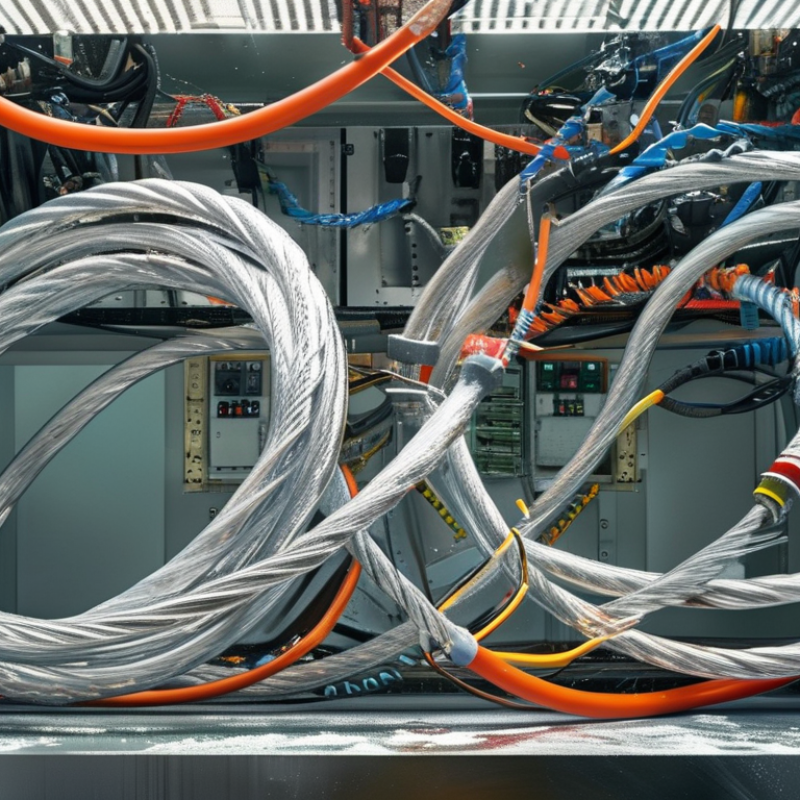
What Is Flexible Cable Wire and Where Is It Used?

What Is Flexible Cable Wire?

Flexible cable wire is designed to bend repeatedly without quickly breaking. Unlike solid-core wire, it uses many thin metal strands twisted together. This structure gives Flexible Wire its softness and movement. A protective insulation layer surrounds the conductor and helps resist moisture, abrasion, heat, and electrical contact. The exact performance depends on the metal, strand count, insulation material, and cable size. More strands usually improve flexibility, but they can also increase cost and require careful termination. It is easy to overlook that detail.

In practical work, flexible cable wire appears inside control panels, portable tools, moving machines, lighting systems, and vehicle assemblies. It can follow a hinged cover or pass through a narrow cable carrier. A correct installation still needs enough slack and a suitable bending radius. Sharp bends may damage the strands beneath the insulation, even when the outside looks normal. The wire should also match the circuit’s voltage, current, temperature, and environmental conditions. For example, a cable near a motor may need stronger insulation and better resistance to vibration. In workshops, loose terminals are a common weakness. Good flexibility cannot compensate for poor connections. Technicians should inspect the sheath for cuts, flattening, discoloration, and exposed strands before energizing equipment. Selection is not always straightforward, and checking the relevant electrical standard is part of reliable practice.

How Flexible Cable Wire Is Designed and Constructed

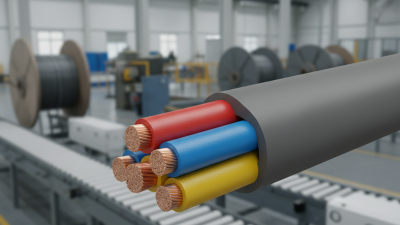
Flexible cable wire is engineered to move repeatedly without losing electrical performance. Its design starts with a stranded conductor, usually made from many thin metal strands. Finer strands create better flexibility than a solid core. The conductor may also use a compact arrangement to reduce its overall diameter.

Insulation surrounds each conductor and controls electrical leakage. Common materials include PVC, thermoplastic elastomer, and polyurethane-based compounds. Engineers choose them according to temperature, oil exposure, abrasion, and required bend cycles. Conductors are twisted with a controlled lay length. This reduces internal stress when the cable bends. Fillers may keep the cable round, while shielding helps limit electromagnetic interference. Small details matter here.

An outer jacket protects the assembly from cuts, moisture, and movement. In robotic equipment, the jacket must tolerate constant flexing near joints. In control cabinets, it may need only moderate movement and easy routing. The cable’s bend radius, voltage rating, current capacity, and operating temperature must match the installation. A cable can look flexible but still fail under repeated tight bends. Field inspections often reveal this mistake. Designers test samples through repeated motion, yet real installations can be less predictable. Dust, heat, poor routing, and sudden pulling may shorten service life. That is why construction choices should reflect the actual working environment, not only laboratory results.

Key Materials Used in Flexible Cable Wire

Flexible cable wire is designed to bend repeatedly without quickly breaking. Its performance depends heavily on the materials chosen for each layer. Copper is commonly used for the conductor because it carries current efficiently and bends well. Fine copper strands improve flexibility compared with one solid core. Tinned copper adds resistance to oxidation in humid or exposed environments.

Insulation Materials Insulation protects the conductor from heat, moisture, and accidental contact. PVC is widely used because it is economical, durable, and easy to process. Flexible Pvc Wire can serve in control panels, household equipment, lighting systems, and low-voltage machinery. However, PVC can become stiff in cold conditions. That detail is easy to overlook during product selection. TPE and TPU offer better flexibility and abrasion resistance for moving equipment. Silicone insulation performs well near heat, although it may tear more easily under sharp mechanical stress.

The outer jacket may use PVC, polyurethane, or rubber-like compounds. Its job is practical: resist oil, friction, bending, and sunlight. Some cables include braided shielding made from copper or aluminum alloys. Shielding helps reduce electrical interference near motors and sensors. Fillers may be added to maintain a round cable shape. This supports smoother movement through cable chains. In real installations, the best material is not always the most expensive one. Temperature, bend radius, chemical exposure, and installation space must be checked together. A cable that feels flexible by hand may still fail after thousands of bends. Testing matters.

Main Types of Flexible Cable Wire

What Is Flexible Cable Wire and Where Is It Used?

Flexible cable wire is designed to bend repeatedly without breaking its conductors or insulation. Its main types differ in strand size, shape, shielding, and jacket material. Fine-stranded wire bends easily and suits control panels, sensors, portable tools, and moving machine parts. Extra-fine stranded wire handles tighter bends and repeated motion, although it may cost more and require careful termination.

Shielded flexible cable contains a conductive layer around the inner wires. It helps reduce electrical noise near motors, inverters, and data equipment. Flat cable uses parallel conductors and saves space inside compact assemblies. Spiral cable stretches and returns to shape, making it useful for hand controls and adjustable equipment. PVC jackets are practical for general indoor use, while rubber or thermoplastic elastomer jackets often handle abrasion, oil, and outdoor movement better. No single type fits every installation. That detail is easy to overlook.

Tips: Check the bending radius before installation. Smaller is not always better. Confirm voltage, temperature, conductor size, and motion frequency. Use matching terminals and strain relief. In field work, many failures begin at the connector, not inside the cable. I still recheck routing after assembly, because a cable that moves freely on the bench may rub against a sharp edge during operation.

Where Flexible Cable Wire Is Commonly Used

What Is Flexible Cable Wire and Where Is It Used?

Flexible cable wire is designed to bend repeatedly without quickly breaking its conductor or insulation. Its stranded copper core moves more easily than a solid wire. This makes it practical for equipment that vibrates, slides, or changes position during operation.

Where Flexible Cable Wire Is Commonly Used

Flexible cable wire appears in household appliances, control cabinets, lighting systems, and movable machinery. A washing machine may need wiring that tolerates vibration during a fast spin cycle. Desk lamps, adjustable displays, and powered tools also benefit from compact, bendable conductors. Pvc Flexible Wire is often selected for indoor connections because its insulation is lightweight, easy to process, and resistant to ordinary moisture and abrasion.

It is also used in factory equipment, sensor assemblies, and small robotic movements. Cable carriers guide these wires along a planned route, preventing sharp bends and crushing. Keep it moving smoothly. During installation, technicians should check the conductor size, voltage rating, temperature range, and bending radius. A wire that fits physically may still be electrically unsuitable. That mistake is easy to make.

In practical inspections, loose routing is a frequent weakness. Repeated rubbing against a metal edge can damage insulation long before the copper fails. I once assumed a Flexible Wire could replace any fixed cable, but that view was too broad. Flexibility does not guarantee resistance to oil, heat, sunlight, or continuous motion. The surrounding conditions still decide whether the cable is appropriate.

How to Select the Right Flexible Cable Wire

Flexible Electrical Wire is designed to bend repeatedly without losing electrical performance. It commonly contains fine stranded conductors, insulation, and sometimes an outer protective jacket. The right choice depends on movement, current, voltage, temperature, and installation conditions. A cable that works inside a control panel may fail quickly in a moving machine.

Start by checking the required current and voltage. Choose a conductor size that handles the load without excessive heating. Then examine the bending pattern. Occasional movement needs different construction from thousands of cycles in a cable carrier. Look for the minimum bend radius and keep the real installation above that limit. Tight bends are a common mistake.

Temperature also matters. Heat from motors, sunlight, or nearby equipment can harden insulation. Cold environments may make it brittle. Select insulation that suits the full operating range, not only the room temperature. For wet areas, check resistance to moisture, oil, chemicals, and abrasion. Measure the route carefully. Extra length helps maintenance, but loose loops can snag.

I have seen installations fail because the cable was selected by appearance alone. It looked flexible. That was not enough. Check conductor class, insulation material, shielding needs, and certification requirements. A qualified electrician should verify the final selection, especially for high-power systems. Specifications can be confusing, and one detail may still be overlooked.

What Is Flexible Cable Wire and Where Is It Used? - How to Select the Right Flexible Cable Wire

Flexible Cable Type Typical Conductor Insulation or Jacket Typical Voltage Rating Typical Temperature Range Flexibility and Movement Capability Common Applications Key Selection Considerations
PVC Flexible Control Cable Stranded annealed copper, commonly Class 5 flexible conductor PVC insulation and PVC outer jacket 300/500 V to 450/750 V Approximately -15°C to +70°C Suitable for occasional movement and fixed installations; not normally intended for continuous high-speed drag-chain use Control panels, sensors, small machinery, internal equipment wiring, and building services Choose when cost, general-purpose flexibility, and normal indoor conditions are more important than extreme mechanical or environmental resistance
PVC Flexible Power Cable Multi-stranded copper conductors with one or more cores PVC insulation and flexible PVC sheath 450/750 V or 0.6/1 kV Approximately -15°C to +70°C Flexible for portable equipment and repeated repositioning, depending on construction Portable tools, temporary power distribution, light industrial equipment, and extension assemblies Check conductor cross-sectional area, allowable current, voltage drop, bending radius, and protection against abrasion
PUR Drag-Chain Cable Fine-stranded or extra-fine-stranded tinned or bare copper Polyurethane outer jacket, often with individually insulated cores and shielding options 300/500 V to 0.6/1 kV Approximately -40°C to +80°C or higher, depending on construction Designed for repeated flexing, torsion, and continuous movement in cable carriers CNC machines, automated production lines, robotic equipment, and energy-chain systems Verify the manufacturer’s rated flex cycles, minimum bend radius, travel speed, acceleration, torsion limits, and compatibility with the cable carrier
Rubber Flexible Cable Fine-stranded copper, frequently using flexible Class 5 or Class 6 conductors Elastomer or rubber insulation and sheath 300/500 V to 0.6/1 kV Approximately -25°C to +60°C or +90°C, depending on rubber compound Very flexible and resistant to repeated handling, vibration, and impact Welding equipment, construction tools, industrial machinery, outdoor portable equipment, and power supply leads Consider oil resistance, outdoor exposure, mechanical stress, flame performance, and whether the cable will be dragged or suspended
Shielded Flexible Control Cable Stranded copper conductors with foil, braid, or combined shielding PVC, PUR, or other flexible insulation and jacket materials 300/500 V to 0.6/1 kV Commonly -20°C to +80°C Flexible for moving control and signal circuits; shielding improves electromagnetic compatibility Variable-speed drives, instrumentation, automation systems, measurement equipment, and motor control circuits Select the shield type, coverage, drain-wire arrangement, grounding method, and separation from high-current power cables
Servo or Motor Flexible Cable Stranded copper power cores, protective earth, and sometimes brake or feedback cores Flexible PVC, PUR, or low-smoke zero-halogen materials Commonly 0.6/1 kV Approximately -30°C to +90°C, depending on insulation system Designed for motor supply movement, vibration, and in some constructions continuous flexing Servo motors, industrial drives, automated machinery, and motion-control systems Match the cable to motor current, inverter output, shielding requirements, feedback signals, bend radius, and EMC installation practices
Low-Smoke Zero-Halogen Flexible Cable Stranded copper conductors Halogen-free thermoplastic or cross-linked insulation and sheath 300/500 V to 0.6/1 kV Approximately -30°C to +90°C Flexible, with reduced smoke and corrosive-gas emission during fire compared with many PVC constructions Public buildings, transportation facilities, data rooms, tunnels, and evacuation routes Confirm fire classification, smoke density, gas acidity, halogen-free status, installation method, and local code requirements
Silicone Flexible Cable Fine-stranded tinned or bare copper Silicone rubber insulation and sheath 300/500 V to 0.6/1 kV Approximately -60°C to +180°C Remains flexible across a wide temperature range; generally softer but less resistant to cutting than PUR Heating equipment, ovens, lighting systems, laboratory equipment, and high-temperature machinery Choose for high or low temperatures, then check abrasion resistance, tear strength, oil exposure, flame behavior, and mechanical protection
Flat Flexible Cable Parallel stranded copper conductors PVC, PUR, or elastomeric insulation and jacket Commonly 300/500 V to 0.6/1 kV Approximately -20°C to +80°C Permits controlled bending in one plane and can fit narrow cable tracks or compact equipment Elevators, cranes, festoon systems, automated doors, and space-limited moving assemblies Check orientation, hanging length, travel direction, unsupported weight, bending radius, and suitability for festoon or elevator service

Selection principle: Choose flexible cable wire by matching the conductor size and current capacity with the required voltage, movement pattern, minimum bending radius, temperature, chemicals, oil, moisture, abrasion, shielding, fire performance, and applicable electrical standards. Ratings are typical ranges; the exact value must be confirmed from the cable’s technical datasheet and local installation requirements.

BS5308 Part 1 Type 1 300/500V PE/OS/PVC Instrumentation Cable: Features, Applications and Selection Guide

BS 5308 Part 1 Type 1 300/500V PE/OS/PVC instrumentation cable is designed for reliable low-voltage communication, control and data-transmission circuits in industrial environments. Its polyethylene (PE) insulation supports stable electrical performance, while the overall screen (OS) helps reduce electromagnetic interference from motors, drives and other plant equipment. The PVC sheath provides mechanical protection and resistance to common industrial moisture and oils. As an unarmoured construction, it is mainly installed indoors, including damp or wet areas, where additional mechanical protection is not required. The 300/500V rating suits instrumentation and interconnection duties rather than high-power distribution.

Selection should consider signal type, installation temperature, moisture exposure, screening requirements and the risk of mechanical impact. In process plants, the cable can connect sensors, control panels and electrical equipment, while petroleum facilities use it for communication and data transmission around processing and utility systems. The International Energy Agency’s *Oil 2024* outlook highlights continuing investment in refining and petrochemical capacity, reinforcing the need for dependable signal infrastructure in these facilities. Engineering guidance aligned with BS 5308 and IEC installation practices also emphasizes segregation from power cables, correct earthing of the screen and suitable glands at equipment entries. For wet indoor locations, installers should verify sheath compatibility, drainage and enclosure ingress protection before choosing the unarmoured PE/OS/PVC construction.

FAQS

: What is flexible cable wire?

: Flexible cable wire uses many fine metal strands instead of one solid core. It bends repeatedly with less stress. That is the basic idea.

Where is flexible cable wire commonly used?

It is used in appliances, control cabinets, lighting systems, tools, sensors, and movable machinery. A washing machine may need wire that survives vibration during spinning. Small robotic joints also require controlled movement.

How should I choose the conductor size?

Match the conductor size to the required current and voltage. An undersized conductor may overheat during operation. Physical fit alone is not enough.

Why is bend radius important?

Bend radius limits how tightly the cable can curve. Keep the actual route above the specified minimum radius. Tight bends can damage insulation and strands.

Which insulation material should I select?

Choose insulation according to temperature, moisture, oil, chemicals, and abrasion. Warm equipment can harden unsuitable insulation. Cold conditions may make it brittle.

Does flexible cable wire tolerate continuous movement?

Some constructions support thousands of bending cycles. Others suit occasional movement only. Check the rated motion pattern and cable-carrier requirements.

Does a protective jacket make the cable suitable for every location?

No. A jacket helps resist cuts, moisture, and rubbing. It may still fail under heat, sunlight, oil, or sharp edges. I once assumed flexibility covered everything. That was too broad.

How can installation problems shorten cable life?

Loose loops may snag, while metal edges can repeatedly rub the insulation. Poor routing, dust, heat, and sudden pulling also increase damage. Smooth routing matters.

Should a qualified electrician verify the final selection?

Yes, especially for high-power systems. The review should confirm current, voltage, temperature, bend radius, shielding, and certification needs. One small detail can remain overlooked.

Conclusion

Flexible Cable Wire is designed to carry electrical power or signals while allowing repeated bending, twisting, and movement. Unlike rigid wiring, it uses finely stranded conductors, carefully selected insulation, and protective outer jackets to improve flexibility, durability, and resistance to heat, moisture, abrasion, and chemicals. Its construction may also include shielding or reinforced layers when protection from electrical interference or mechanical stress is required. Common materials include copper or other conductive metals, flexible plastics, rubber-like compounds, and specialized protective coatings.

There are several types of Flexible Cable Wire, including power cables, control cables, signal cables, data cables, and cables designed for continuous motion. They are widely used in automation equipment, robotics, industrial machinery, medical devices, transportation systems, renewable energy installations, and movable electronic products. Choosing the right cable depends on voltage, current, operating temperature, bending frequency, movement pattern, installation environment, required shielding, and expected service life. Careful selection helps maintain reliable performance, reduce maintenance, and improve overall system safety.
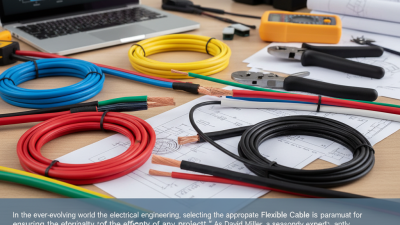
Aiden

Aiden

Aiden is a dedicated marketing professional at Henan Hesong Cable Co., Ltd., where he leverages his extensive knowledge of the cable industry to drive product awareness and customer engagement. With a strong background in engineering and business, Aiden has developed a keen understanding of the......
Previous Top Tips for Effective Low Voltage Cable Management Solutions?