Hesheng Cable

Leave Your Message
China's market for Three Phase Armoured Cable is really picking up steam, thanks to ongoing grid upgrades, renewable energy projects, new industrial facilities, and the buzz around data-center builds. According to industry reports from Grand View Research and MarketsandMarkets, there’s a pretty steady demand for power cables, especially across infrastructure projects in the Asia-Pacific region. That said, just because the market’s growing doesn’t automatically mean every supplier out there is top-notch quality.
In this guide, we’ll take a closer look at some of the leading Chinese suppliers of Three Phase Armoured Cable, using practical criteria that really matter when you're making a purchase. Things like conductor materials, insulation systems, armour design, voltage ratings, testing capabilities, delivery history, and export experience. Standards are important too. For example, IEC 60502-1 covers low-voltage power cables, while IEC 60502-2 is the go-to for medium-voltage ones. A reliable supplier should also be able to share clear, traceable test reports, evidence of factory inspections, and relevant certifications.
Some potential companies worth considering include Jiangnan Cable, Zhaolong Interconnect, Shanghai Shenghua Cable Group, and Zhengzhou Jinyu Cable. Keep in mind, their product ranges and manufacturing strengths can vary a lot. Just having a huge catalog isn’t enough—buyers should dig a bit deeper and check things like copper purity, how well cross-linked polyethylene performs, the type of armour (steel tape or wire), sheath resistance, and how the cables behave during actual installation, especially bending.
In the end, paying attention to these details really shows whether a supplier is reliable or not.
Plus, reports from the International Energy Agency highlight increasing pressure on electrical grids and more investments in networks. This definitely keeps the demand for cables high, but it also ramps up the importance of quality. Some supplier claims can be tricky to compare directly, which is why factory visits, sample testing, and solid project references are still crucial. So, this guide focuses more on concrete evidence rather than just popularity, understanding that supplier rankings can shift over time with new certifications, changes in capacity, or customer feedback.
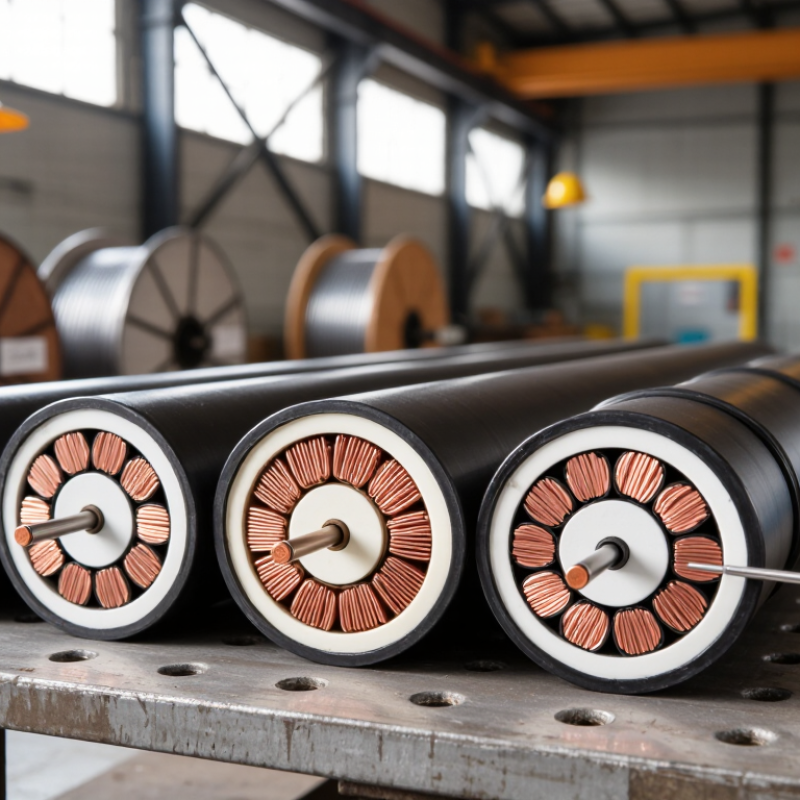
A three-phase armoured cable carries alternating current through three conductors separated by about 120 electrical degrees. This arrangement delivers steady power to motors, pumps, transformers, and industrial distribution panels. A Three Phase Cable usually includes copper or aluminum conductors, individual insulation, an inner sheath, metallic armour, and an outer protective jacket. The armour may use steel wires or steel tape. It protects the cable from crushing, impact, and some mechanical stress.
The conductors must match the system voltage, load current, installation length, and allowable voltage drop. Insulation materials also matter. PVC suits many standard installations, while XLPE often supports higher operating temperatures. A protective earth conductor may be integrated or installed separately, depending on the design. Not every armoured cable is suitable for direct burial. Soil moisture, chemical exposure, sunlight, and drainage can change the specification.
In supplier evaluations, technical documents deserve more attention than polished product photos. Check conductor resistance, armour coverage, test reports, drum markings, and traceable production records. That detail matters. Field installers also need the correct bending radius and gland size. A cable can look robust and still fail after careless handling. I would not trust a catalogue statement without verified testing. Measure twice. Specify once. Even experienced teams can overlook temperature correction when several cables share one enclosed route.
| Evaluation Dimension | Typical Verified Specification or Requirement | Why It Matters When Selecting a Supplier |
|---|---|---|
| Cable definition | A three-phase armoured cable contains three current-carrying phase conductors and a protective metallic armour layer beneath the outer sheath. | Confirms that the proposed product is suitable for three-phase power distribution and mechanical protection requirements. |
| Common core arrangements | Three-core cables are used for three-phase circuits without a neutral conductor; four-core or five-core designs can include a neutral and, where required, a protective earth conductor. | The supplier should provide the correct core configuration for the electrical system and installation method. |
| Conductor material | Copper and aluminium are standard conductor materials. Stranded Class 2 conductors are commonly specified for fixed installations under IEC 60228. | Copper provides higher conductivity and smaller conductor sizes, while aluminium can reduce cable weight and material cost. |
| Insulation material | XLPE is widely used for power cables because it supports a normal maximum conductor operating temperature of approximately 90°C. PVC insulation is also used for lower-temperature applications. | Insulation selection affects current-carrying capacity, thermal performance, service life, and installation conditions. |
| Voltage range | Low-voltage armoured cables are commonly rated up to 1 kV under IEC 60502-1. Medium-voltage designs from 6 kV to 30 kV are covered by IEC 60502-2. | The supplier must match the cable voltage rating with the system voltage, insulation level, and network requirements. |
| Armour type for multicore cable | Galvanized steel wire armour or steel tape armour is commonly used for mechanical protection in multicore cables. | Armour construction influences crush resistance, tensile protection, bending characteristics, weight, and termination requirements. |
| Armour type for single-core cable | Aluminium wire armour is commonly considered for single-core AC cables because non-magnetic armour helps reduce induced circulating currents and associated losses. | A technically appropriate armour material helps prevent unnecessary heating and improves electrical efficiency. |
| Outer sheath | PVC, PE, and low-smoke zero-halogen compounds are common sheath options, depending on environmental and fire-safety requirements. | Sheath selection should reflect moisture, oil, sunlight, chemical exposure, fire risk, and indoor or outdoor installation conditions. |
| Applicable manufacturing standards | IEC 60502-1 and IEC 60502-2 are widely used for power cables with extruded insulation. Other projects may require BS, ASTM, GB/T, or customer-specific specifications. | Standards define construction, dimensions, testing, voltage ratings, and acceptance criteria, making supplier comparisons more reliable. |
| Conductor resistance testing | DC conductor resistance should comply with the applicable conductor class and cross-sectional area requirements specified by IEC 60228 or the agreed project standard. | Resistance affects voltage drop, power loss, operating temperature, and long-term energy efficiency. |
| Routine electrical tests | Routine checks commonly include conductor resistance, voltage withstand, and insulation-related tests as required by the applicable standard. | Documented routine testing provides evidence that each production length meets essential electrical performance requirements. |
| Fire-performance options | Depending on the project, requirements may include flame propagation testing under IEC 60332, halogen acid gas testing under IEC 60754, and smoke emission testing under IEC 61034. | Fire-performance requirements are especially important in tunnels, transportation facilities, public buildings, and enclosed industrial areas. |
| Installation environment | Armoured cables may be installed directly underground, in ducts, on cable trays, or in industrial facilities, subject to the cable design and local installation rules. | The supplier should confirm suitability for burial depth, ambient temperature, soil thermal resistivity, bending radius, and exposure conditions. |
| Current-carrying capacity | Ampacity depends on conductor size, conductor material, insulation temperature rating, installation method, ambient conditions, grouping, and soil characteristics. | A reputable supplier should provide calculation data rather than selecting cable size from conductor area alone. |
| Documentation capability | A complete technical submission should include datasheets, dimensional information, test reports, packing details, certificates, and applicable standard references. | Clear documentation reduces approval delays and supports inspection, installation, and future maintenance. |
| Quality-control capability | Important controls include incoming material inspection, conductor resistance checks, dimensional inspection, insulation and sheath testing, and traceable production records. | Consistent process control is a stronger supplier-selection indicator than price alone. |
| Supplier comparison priority | Compare compliance with the requested standard, confirmed cable construction, test evidence, delivery capability, packaging, warranty terms, and technical support. | A company-neutral evaluation prevents supplier selection based only on marketing claims or nominal conductor size. |
Rubber Submersible Cable is an essential component in drinking-water pumping systems, where dependable power transmission must be maintained under continuous immersion. Designed for connection with submersible pumps, these cables typically use flexible rubber insulation and a water-resistant outer sheath to withstand moisture, abrasion, vibration, and repeated bending. They may also be used in industrial-water applications, including wells, reservoirs, drainage systems, and treatment facilities. For potable-water installations, material selection should prioritize low-odor, low-leaching compounds and documented suitability for contact with drinking-water environments.
Insights from recent Grand View Research and Mordor Intelligence market analyses indicate steady global expansion in water infrastructure, pump equipment, and treatment investment, with many related segments forecast to grow at mid-single-digit compound annual rates through the end of the decade. This development is increasing demand for submersible systems that can operate efficiently in deeper wells and remote water facilities. As pump installations become more automated and energy-conscious, cable performance factors such as conductor flexibility, thermal resistance, sealing integrity, and long service life are receiving greater attention. Selecting the correct rubber submersible cable helps support stable pump operation while reducing maintenance interruptions in both drinking-water and industrial-water networks.
It carries alternating current through three conductors spaced about 120 electrical degrees apart. The arrangement provides steady power. It commonly serves motors, pumps, transformers, and industrial panels.
Conductors usually contain copper or aluminum. Each conductor has insulation, followed by inner sheathing, metallic armour, and an outer jacket.
Steel wires or steel tape help resist crushing, impact, and mechanical stress. Armour does not make careless installation harmless.
Match the conductor to voltage, load current, cable length, and permitted voltage drop. Temperature and grouping also affect the final selection.
No. Soil moisture, chemicals, sunlight, and poor drainage can change the required construction. Confirm burial suitability with technical documents.
PVC suits many standard installations. XLPE often supports higher operating temperatures. The correct choice depends on the site and operating conditions.
Look for resistance data, armour coverage, test reports, batch numbers, drum markings, and traceable production records. Product photos prove very little.
Installers must check bending radius, gland size, core identification, and temperature correction. Several cables in one enclosed route can become hotter than expected.
Compare samples, inspect production capability, verify test records, and assess technical support. Independent sampling is wise. I would not trust catalogue claims alone.
This guide explains what a Three Phase Armoured Cable is and why it is widely used for reliable power transmission in industrial, commercial, and infrastructure projects. It highlights the advantages of sourcing from Chinese suppliers, including broad manufacturing capacity, competitive pricing, flexible customization, and access to modern production technologies. Buyers will also learn how to evaluate manufacturers by reviewing production experience, quality-control systems, testing procedures, technical support, and project references.
The article further outlines the certifications and international standards that reputable suppliers should meet, along with key product features such as conductor material, insulation quality, armour protection, voltage rating, temperature resistance, and suitability for different installation environments. Finally, it explains how to compare suppliers based on total cost, quotation transparency, production and delivery schedules, warranty terms, communication, and after-sales service. These factors help purchasers select a dependable supplier that can provide safe, durable, and cost-effective cable solutions for long-term use.