Picking the right Thhn Wire size isn’t just about matching a number to a circuit. It’s one of those choices that quietly affects heat, voltage drop, install cost, and how long the whole thing holds up. So in this guide, we’ll walk through ten common sizes—everything from 14 AWG lighting conductors up to 4/0 AWG feeders—and talk about where each one tends to make sense.
The 2023 National Electrical Code is still the go-to, especially Tables 310.15(B)(16) and 310.16, when you’re figuring out ampacity. UL Solutions’ UL 83 standard also lays out performance requirements for thermoplastic-insulated wires, and that covers a lot of THHN and dual-rated THHN/THWN-2 products. And according to the U.S. Bureau of Labor Statistics, demand for electricians keeps rolling along—which is a good reminder of why knowing how to choose wire in the real world matters on a busy jobsite.
That said, code tables won’t solve every problem you run into. Conduit fill, ambient temperature, bundled conductors, terminal ratings, and voltage drop can all change the final answer.
Mike Holt, founder of Mike Holt Enterprises, puts the safety side of it pretty simply: “The breaker protects the wire.” That little sentence is worth taking seriously. A bigger breaker cannot make undersized Thhn Electrical Wire safe. And a clean-looking wire chart can lead you the wrong way if you ignore the installation conditions. Before ordering, buyers should double-check copper vs. aluminum, insulation rating, voltage rating, listing marks, and manufacturer documentation. This article can help you compare options, but it’s not a replacement for the current NEC, local rules, or a qualified electrical professional. Mistakes happen—even to folks who’ve been doing this a long time. The point is to make them less likely.
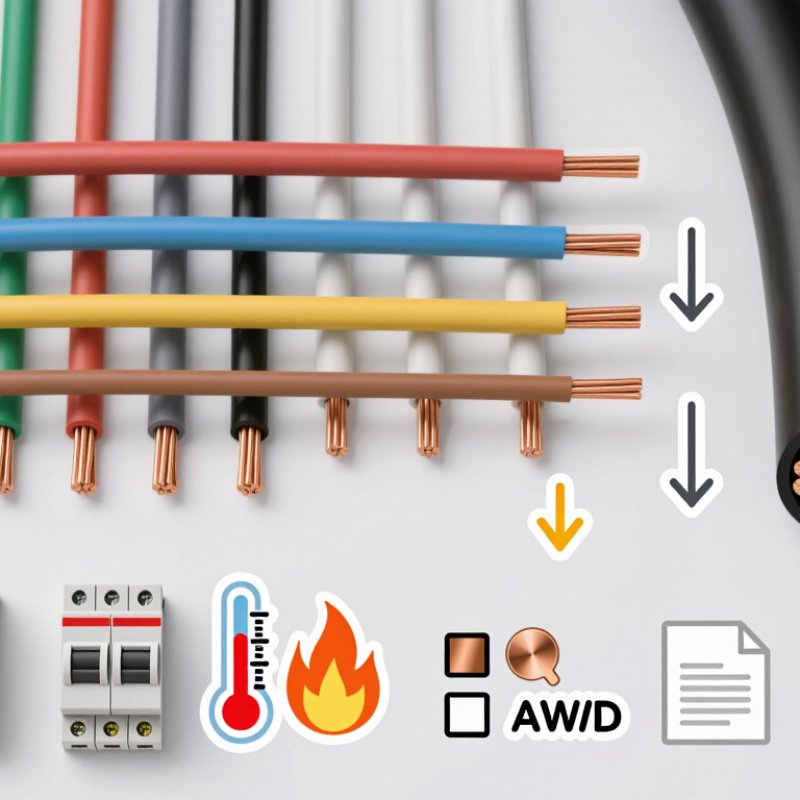
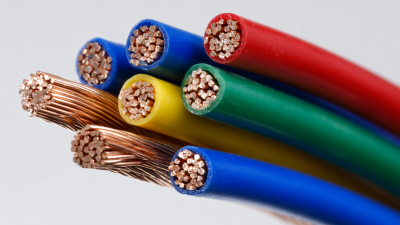
Thhn Wire is a single-conductor building wire designed for reliable electrical distribution. Its copper core carries current, while PVC insulation resists heat and moisture. A nylon jacket adds abrasion and chemical protection. This layered construction affects flexibility, pulling effort, and long-term durability inside conduit. THHN commonly supports 600 volts and 90°C in dry locations. Always verify the actual rating before installation.
The most common sizes include 14, 12, 10, 8, 6, 4, 3, 2, 1, and 1/0 AWG. Smaller sizes suit lighting and household circuits. Larger conductors serve feeders, panels, motors, and high-demand equipment. In field installations, a stiff 1/0 conductor can resist tight bends. That detail is easy to underestimate. Conduit fill, ambient temperature, terminal ratings, and voltage drop also influence size selection. An ampacity table alone may not settle the decision.
Tips: Match the wire size with the breaker and load. Check insulation markings before pulling conductors. Keep bends gradual, especially with larger sizes. Do not assume every black wire serves the same purpose. Poor labeling creates avoidable troubleshooting. A careful buyer should inspect copper condition, jacket uniformity, and printed ratings. Even experienced installers occasionally overlook temperature correction. That deserves a second check.
Ampacity values below are based on copper THHN conductors using the 75°C column for circuits rated up to 600 V. Actual applications must also consider temperature, conduit fill, ambient conditions, and local electrical-code requirements.
THHN is a thermoplastic-insulated, heat-resistant, nylon-jacketed building wire. Smaller conductors are commonly used for lighting and branch circuits, while larger sizes are typically selected for feeders, subpanels, motors, and high-load equipment. Ampacity is not the same as allowable circuit size in every installation because adjustment and correction factors may apply.
THHN wire is compared by more than its outside appearance. American Wire Gauge uses a logarithmic scale: a smaller number means a larger conductor. ASTM B258 defines nominal dimensions for round copper and aluminum conductors. Common sizes include 14, 12, 10, 8, 6, 4, 3, 2, 1, and 1/0 AWG. A 6 Awg Thhn Wire conductor measures 26,240 circular mils, while 10 AWG measures 10,380 circular mils. The difference is substantial.
Common uses vary by size. 14 and 12 AWG often serve lighting and branch circuits. 10 AWG suits larger appliances and equipment. Sizes from 8 through 1/0 AWG commonly support feeders, motors, and distribution equipment. The 2023 NFPA 70, Table 310.16, lists 6 AWG copper at 65 amperes in the 75°C column. It lists 8 AWG at 50 amperes and 4 AWG at 85 amperes. These are not automatic circuit ratings. Terminal temperature, conductor material, ambient heat, bundling, and voltage drop can reduce the allowable value. UL 83 also sets performance requirements for thermoplastic-insulated wire, including required markings. Buyers should verify the printed size, temperature rating, conductor material, and wet-location designation. I still find this step easy to underestimate.
THHN wire appears in homes, commercial buildings, and industrial systems. The size must match the load, installation method, and local electrical rules.
14 AWG commonly serves lighting circuits and low-demand controls. 12 AWG is widely used for receptacles and small appliances. 10 AWG handles heavier branch circuits, including water heaters and workshop equipment.
8 AWG often supplies larger appliances, feeders, or long runs where voltage drop matters. 6 AWG is suitable for substantial feeders, some electric equipment, and selected vehicle charging installations. These examples are typical, not automatic approvals.
4 AWG supports larger subpanels and demanding equipment. 3 AWG appears in commercial feeders and long-distance power runs. 2 AWG handles higher-capacity feeders and service-related applications. 1 AWG is chosen for major distribution circuits.
1/0 AWG serves very large feeders, industrial equipment, and some service entrances. Stranded Thhn Wire is useful in larger sizes because it bends more easily through conduit. Tight bends still create trouble.
Always verify ampacity, conductor material, insulation temperature, terminal ratings, and ambient conditions. A 90°C rating does not always permit 90°C operation. Voltage drop may also require a larger conductor, especially across a long warehouse or detached building. I have seen oversized conductors fail at poorly tightened terminals. That detail is easy to overlook. Local inspection requirements can differ, so the final selection should be checked against the current electrical code and a qualified electrician’s field judgment.
Choosing among the ten common THHN sizes—14, 12, 10, 8, 6, 4, 3, 2, 1, and 1/0 AWG— requires more than matching wire diameter to load. Smaller sizes often serve lighting and receptacle circuits, while larger sizes support feeders, motors, and long runs. Ampacity changes with conductor size, insulation temperature, ambient heat, and the number of current-carrying conductors in one conduit.
THHN insulation is commonly rated for 90°C in dry locations. That rating helps with adjustment and correction calculations. It does not automatically permit 90°C operation at the terminals. Many installations remain limited by 75°C equipment connections. Check the applicable electrical code and equipment markings. A neat calculation can still be wrong.
Conduit rules also affect selection. Three or more conductors generally cannot exceed 40% of the conduit’s internal area. Derating may reduce allowable ampacity when several loaded conductors share the raceway. Tight bends, long pulls, and voltage drop deserve attention too. For wet locations, verify whether the conductor also carries a suitable wet-location rating. The practical choice is often one size larger, but not always. Use current code tables, confirm terminal ratings, and have a qualified electrician review unusual conditions.
Choosing the right THHN wire depends on circuit load, installation space, and local electrical rules. In residential work, 14 AWG commonly serves 15-amp lighting circuits, while 12 AWG suits many 20-amp receptacle circuits. Ten AWG often supports 30-amp dryers, water heaters, or dedicated equipment. These are practical Household Wire choices, but 14 AWG copper cannot automatically serve a 20-amp circuit. The National Electrical Code, NFPA 70, 2023 edition, requires careful consideration of overcurrent protection, temperature ratings, and conductor adjustments.
Commercial projects usually move toward 8, 6, and 4 AWG for feeders, air-conditioning equipment, and larger branch circuits. Industrial installations may require 3, 2, 1/0, and 4/0 AWG, especially for motors, panels, and long distribution runs. Under the 75°C copper column in NFPA 70 Table 310.16, these sizes are listed at approximately 50, 65, 85, 100, 115, 150, and 230 amps, respectively. Real capacity can fall when conductors share a crowded conduit or face high ambient heat. Check the installation conditions.
Safety deserves equal attention. An NFPA electrical-fires report estimated about 32,000 U.S. home fires annually from electrical distribution and lighting equipment during 2016–2020. That figure changed my view of “standard” wire selection. Bigger is not always better. Voltage drop, termination space, and compatibility matter. A qualified electrician should verify the final size before purchase.
| THHN Size | Approx. Copper Area | 75°C Ampacity* | Common Circuit Uses | Typical Installation Environment | Buyer Selection Notes |
|---|---|---|---|---|---|
| 14 AWG | 2.08 mm² | 20 A | Lighting circuits, smoke alarms, control wiring, and low-load general-purpose branch circuits. | Residential and light commercial raceways, dry locations, and properly protected conduit systems. | Usually limited to a 15 A branch circuit by the small-conductor rule; verify local code and terminal ratings. |
| 12 AWG | 3.31 mm² | 25 A | 20 A receptacle circuits, kitchen and bathroom outlets, laundry circuits, lighting, and general-purpose equipment. | Residential, commercial, and light industrial conduit installations. | A common choice for 20 A branch circuits; check continuous-load requirements and voltage drop. |
| 10 AWG | 5.26 mm² | 35 A | Water heaters, air-conditioning equipment, dryers, larger receptacle circuits, and short feeder runs. | Residential and commercial branch circuits installed in conduit or cable assemblies approved for THHN conductors. | Frequently used on 30 A circuits; equipment instructions may require a specific conductor size. |
| 8 AWG | 8.37 mm² | 50 A | Ranges, subpanels, welders, larger HVAC equipment, and moderate-size feeders. | Commercial buildings, workshops, and industrial distribution systems. | Useful for higher-load circuits, but conduit fill, bending space, and termination capacity must be checked. |
| 6 AWG | 13.3 mm² | 65 A | Subfeeders, electric vehicle supply equipment, large air compressors, pumps, and commercial equipment. | Residential service feeders and commercial or industrial raceways. | Offers additional ampacity and reduced voltage drop compared with 8 AWG; confirm equipment lug range. |
| 4 AWG | 21.2 mm² | 85 A | Residential and commercial subpanels, larger feeders, motors, pumps, and heavy-duty machinery. | Commercial and industrial conduit systems, including longer feeder routes. | Often selected where load growth or voltage-drop performance is important; installation may require larger raceway. |
| 3 AWG | 26.7 mm² | 100 A | 100 A feeders, service-related conductors where permitted, distribution panels, and industrial equipment. | Commercial switchboards, industrial panels, and larger residential feeder installations. | Confirm whether the equipment is rated for 75°C conductors and verify all service and feeder requirements. |
| 2 AWG | 33.6 mm² | 115 A | Large subpanels, motor feeders, commercial HVAC systems, pumps, and industrial distribution circuits. | Industrial and commercial raceways with moderate-to-high continuous loading. | Suitable for demanding feeders, but conductor derating and parallel-conductor rules may affect the final design. |
| 1 AWG | 42.4 mm² | 130 A | Large building feeders, switchgear connections, industrial motors, and high-capacity distribution equipment. | Commercial service rooms, industrial plants, and large equipment feeders. | Plan for increased pulling tension, bending radius, raceway space, and compatible lugs or terminals. |
| 1/0 AWG | 53.5 mm² | 150 A | 150 A feeders, large subpanels, service equipment where permitted, transformers, and heavy industrial loads. | Large commercial facilities, industrial distribution systems, and major equipment connections. | Verify raceway size, available fault current, termination ratings, voltage drop, and local approval requirements. |
*Ampacity values are for copper THHN conductors using the 75°C column under typical conditions, based on standard ampacity tables. Actual allowable ampacity may be reduced by ambient temperature, more than three current-carrying conductors, conduit fill, termination temperature ratings, continuous loads, voltage drop, and local electrical code requirements. THHN is generally rated 600 V and is intended for dry locations unless the conductor also carries an appropriate wet-location rating.
Choosing among the top 10 THHN wire sizes requires more than matching a wire to a device. Common sizes range from 14 AWG for light-duty circuits to 4/0 AWG for high-amperage feeders. In between, 12 AWG often serves 20-amp branch circuits, while 10 AWG may support larger appliances. Sizes 8, 6, 4, 3, 2, and 1/0 AWG are frequently used for feeders, motors, panels, and long runs. Actual use depends on load, conductor material, insulation rating, and installation conditions. A qualified electrician should verify the calculation.
Check the jacket marking before purchasing. THHN is commonly used in dry locations inside approved raceways, but some conductors also carry a THWN-2 rating for wet environments. Do not assume that every THHN wire has this approval. Local electrical codes may require specific ampacity tables, grounding methods, conduit fill limits, and temperature corrections. Long runs can create voltage drop, even when the ampacity appears acceptable. Heat, bundled conductors, and rooftop exposure can also change the selection. Small details matter. Confirm the circuit breaker, terminal temperature rating, and conductor size together. A frequent buying mistake is choosing a larger wire without checking whether the terminals accept it. That oversight is easy to make, and worth reconsidering before installation.
IEC 60227 450/750V CU/PVC Household Wire: Features, Applications, and Selection Guide
IEC 60227 450/750V copper/PVC household wire is designed for fixed electrical installations where dependable power transmission and everyday safety are required. Its conductor is made of copper to provide good electrical conductivity, while the PVC insulation offers protection against moisture, abrasion, and normal mechanical stress. With a rated voltage of 450/750V, the wire is suitable for many low-voltage distribution and wiring systems. Its flexible construction also makes installation and connection more convenient in practical building projects.
This type of wire is commonly used to supply power for lighting, sockets, and other fixed circuits in office buildings, houses, schools, hospitals, and similar facilities. It can be installed inside conduits, electrical cabinets, walls, or other protected wiring routes, provided that the installation method matches the applicable requirements. When selecting the wire, users should consider the required conductor cross-sectional area, allowable current, installation environment, operating temperature, and cable length. The correct size helps reduce voltage drop and overheating, while suitable insulation characteristics support reliable long-term operation. It is also important to verify that the wire complies with IEC 60227 requirements and that its color, conductor type, and insulation specification are appropriate for the intended circuit.
THHN wire is a single-conductor building wire for electrical distribution. A copper core carries current. PVC insulation resists heat and moisture. A nylon jacket helps protect against abrasion and chemicals.
It is commonly installed inside approved raceways and conduits. Smaller sizes often serve lighting and branch circuits. Larger conductors support feeders, panels, motors, and demanding equipment.
Wire sizes use the American Wire Gauge system. A smaller gauge number means a larger conductor. For example, 6 AWG is much larger than 10 AWG. The difference affects capacity, flexibility, and pulling effort.
Match the conductor size with the load and circuit breaker. Consider voltage drop on long runs. Also check ambient heat, bundled conductors, conduit fill, and terminal limits. An ampacity table alone may not settle it.
Read the printed jacket markings carefully. Check conductor size, material, temperature rating, and location approval. Many conductors support 600 volts and 90°C in dry locations. Verify the actual rating. Do not guess.
Not every THHN conductor is approved for wet environments. Some products also carry a wet-location rating. Confirm the printed marking before installation. The jacket may look identical. That is the trap.
Larger conductors are stiffer and resist tight bends. A 1/0 conductor may require more space and pulling effort. Use gradual bends and check the raceway size. Bigger is not always better.
Inspect the copper surface, jacket uniformity, and printed ratings. Confirm the breaker, terminal rating, and conductor size together. Check temperature correction and voltage drop again. Even experienced installers miss small details.
Thhn Wire is a versatile building wire commonly selected for residential, commercial, and industrial electrical circuits because of its durable insulation, heat resistance, and ability to perform in dry or suitably protected locations. Its construction typically combines a copper or aluminum conductor with a thermoplastic jacket and a nylon coating, helping balance conductivity, flexibility, and protection. Wire sizes are compared by gauge, conductor area, allowable ampacity, and resistance, so size selection should match the expected electrical load rather than relying on appearance alone.
The most common THHN sizes range from small conductors for lighting and control circuits to larger sizes for feeders, motors, and high-demand equipment. Buyers should evaluate ampacity, temperature ratings, conductor material, voltage requirements, conduit fill, ambient temperature, and installation conditions before purchasing. Proper sizing also depends on circuit length, voltage drop, terminal ratings, and applicable electrical codes. Careful attention to pulling methods, connection quality, labeling, and inspection helps ensure a safe, reliable installation.