Choosing the right Water Pump Cable isn’t just some small detail in your purchase—it really does matter. The cable you pick impacts everything from electrical safety and how well your pump performs to how long it lasts and how much maintenance might cost down the line. Keep in mind, buyers all around the world deal with different water depths, temperatures, installation setups, and voltage needs. A cable that works great in a shallow agricultural well might totally flop when used in a deep industrial borehole.
Elena Marquez, who’s the Technical Director at Aquaflex Cable Systems, once said, “A Pump Cable has to match the environment before it even looks at the price.” Honestly, that’s a pretty spot-on lesson from the field. You can’t just grab the first cable that seems okay—you need to find one that actually fits your specific situation. No one cable is perfect for every project, and thinking otherwise is just setting yourself up for trouble.
In this guide, we’ll walk through the main types of Water Pump Cables that folks across the globe tend to use. For example, flat, submersible cables are great if you’re working in narrow wells—they make installation a lot easier. Round cables, on the other hand, offer more flexibility when you're pulling or servicing the pump. PVC-insulated cables are pretty versatile and suit many standard setups, while rubber-insulated options usually hold up better if there’s a lot of movement, heat, or mechanical stress involved. And if electrical interference is a concern, shielded cables can really help keep things smooth.
Material choice is also key. Copper conductors are generally a solid pick—they deliver good conductivity and reliable connections. On the insulation side, thickness depends on things like voltage and whether or not the cable will be submerged. Don’t forget to double-check details like bend radius, water resistance, temperature limits, conductor size, and how long the cable needs to be. Also, keep in mind that different markets may have different certification requirements, so it’s worth doing your homework.
And honestly, it’s those small details that matter most.
In real projects, things rarely go perfectly. Sometimes, due to tight deadlines or delivery pressure, folks might just pick a familiar cable without really checking if it fits the pump’s actual load. That quick shortcut can lead to overheating, voltage drops, or even early insulation failure. So, take your time—comparison shopping, looking at product data, relying on installation experience, and being honest with your supplier are all super important when picking a Water Pump Cable.
Understanding Water Pump Cable Functions and Operating Conditions
Top Water Pump Cable Types for Global Buyers
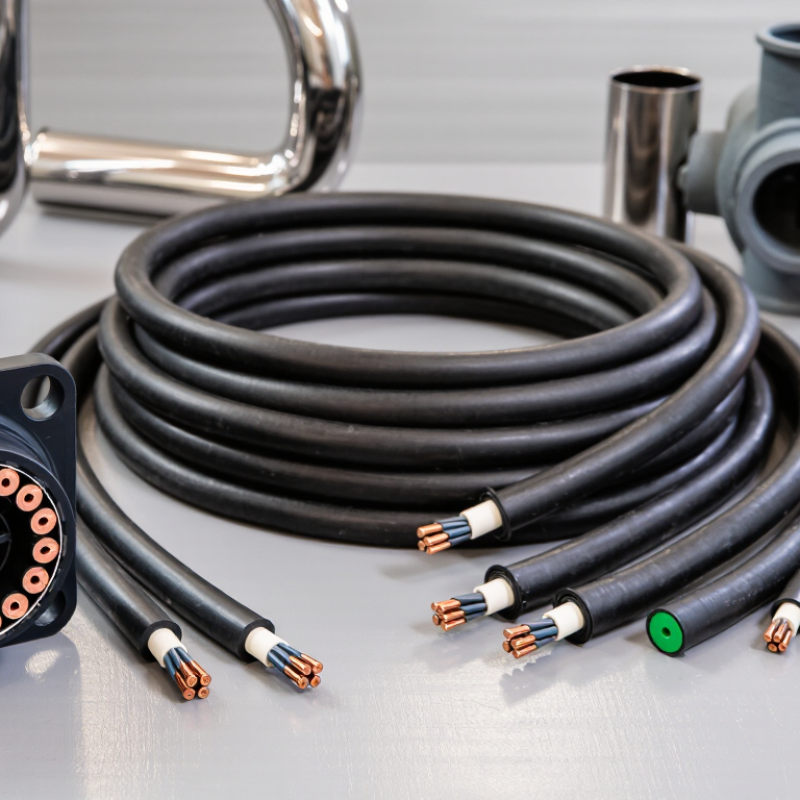
A water pump cable transfers power safely while surviving moisture, pressure, movement, and heat. Submersible Pump Cable is built for continuous contact with water. Its flexible insulation helps it follow a pump through a narrow well or tank. The cable must match the pump’s voltage, current, and installation depth. A small conductor can create voltage drop, overheating, and weak starting performance. That detail is easy to miss. Cable materials also matter. Freshwater, saltwater, chemicals, and wastewater can attack unsuitable insulation. Always check the cable’s temperature rating and resistance to abrasion. In deep installations, weight and pulling stress deserve attention too.
Tips
Measure the actual cable length, not the estimated route. Keep connections sealed above the wet zone when possible. Use strain relief near the pump, because repeated movement can damage conductors. Inspect the jacket for cuts before installation. Do not rely on appearance alone. Certified test data and local electrical requirements provide stronger evidence than a low price.
In practice, cable selection is rarely perfect on the first attempt. Site water chemistry may be poorly documented, and operating temperatures can change seasonally. Recheck these conditions before ordering large quantities. For global buyers, confirm markings, conductor sizes, and technical documents in advance. A cable that works in a cool freshwater well may fail faster in warm, abrasive wastewater.
Comparing Submersible, Flat, Round, and Armored Pump Cables
Top Water Pump Cable Types for Global Buyers
Submersible Pump Cables are built for continuous contact with water. Their insulation must resist moisture, pressure, abrasion, and motor heat. A cable may look strong but still fail when its jacket absorbs water. Check the rated voltage, conductor size, temperature range, and immersion approval before purchase. In field inspections, poor termination is often a bigger problem than the cable itself.
Flat pump cables fit narrow wells and guide more easily beside rising pipes. Their broad shape can reduce twisting, although sharp edges may damage them during installation. Round cables handle pulling and bending more evenly. They are often practical where the pump moves or rotates slightly. Flat and round designs are shapes, not automatic quality grades. Both need a jacket designed for submerged service.
Armored pump cables add mechanical protection for rocky boreholes, exposed routes, or difficult installation areas. However, armor can increase weight and reduce flexibility. It may also require careful grounding and compatible glands. I once favored armored construction for every deep-well project, but that choice was not always sensible. In clean, protected wells, the extra layer can complicate handling without adding much value. Ask for factory test records, conductor resistance data, and clear installation limits. Local conditions decide more than appearance.
Matching Cable Materials to Voltage, Current, and Pump Capacity
Choosing the right water pump cable starts with voltage, current, and pump capacity. A cable that suits a small 230 V pump may fail on a high-capacity unit. Cable size must account for operating current, starting current, run length, and installation temperature.
Copper conductors usually provide dependable conductivity and lower voltage drop. PVC insulation works well in protected areas, while XLPE or EPR insulation handles higher temperatures and demanding electrical conditions. For submerged pumps, select a flexible cable with a water-resistant jacket. Rubber or specialized elastomer compounds can resist repeated bending, moisture, and abrasion. Keep it simple.
Pump capacity affects more than conductor size. A larger motor often draws higher current, especially during startup. Long cable runs create additional voltage loss, causing weak starting, overheating, or unstable performance. Voltage drop calculations should use the full route length, not only the visible section. Length changes everything.
In practical inspections, cable failures often come from undersizing, poor terminations, or damaged outer jackets. Do not guess. Compare the pump’s rated current with the cable’s allowable ampacity, then apply local installation rules and derating factors. A neat specification table cannot replace checking ambient temperature, conduit fill, water exposure, and connection quality. Sometimes a slightly larger cable is the safer choice, but it may increase cost and make installation less flexible. That trade-off deserves review before purchasing.
Top Water Pump Cable Types for Global Buyers
Matching cable insulation and conductor materials to voltage, current, and pump capacity is essential for safe water-pump operation. The reference values below represent typical copper pump-cable constructions used on 400 V, three-phase systems.
PVC-insulated cables are economical for standard installations, while XLPE and EPR insulation provide higher thermal resistance. Rubber-sheathed cables are widely used where flexibility, moisture resistance, and mechanical durability are important. The pump capacities are approximate three-phase electrical input values calculated at 400 V and a power factor of 0.80. Final cable selection must also consider cable length, voltage drop, installation method, ambient temperature, starting current, and local electrical standards.
Selecting Insulation for Water, Heat, Chemicals, and Mechanical Stress
Top Water Pump Cable Types for Global Buyers
Selecting a Cable Submersible Pump cable begins with the water itself. Clean freshwater, saltwater, and wastewater can attack insulation differently. For ordinary freshwater, flexible PVC may provide practical protection and easy handling. However, continuous immersion demands a jacket designed for water penetration resistance. Small cracks near the pump entry point can become serious faults.
Heat changes the decision. Warm wells and industrial tanks require insulation rated for the actual operating temperature, not the room temperature. Thermoplastic elastomer and rubber compounds often remain flexible under heat and repeated movement. Check the cable’s temperature rating against motor load, water temperature, and installation depth. I once underestimated heat near a pump outlet. The outer jacket looked normal, but the insulation had hardened.
Chemicals require closer investigation. Oils, cleaning agents, chlorides, and acidic water may weaken unsuitable materials. Ask for chemical compatibility data instead of relying on general labels. Mechanical stress matters too. A suspended pump can pull heavily on conductors, especially during lifting or vibration. Use a cable with suitable tensile support, smooth flexibility, and a properly sealed gland. Avoid sharp bends at the wellhead. They leave hidden pressure marks. Installation records, batch testing, and insulation resistance checks improve reliability, although field conditions can still expose weaknesses.
Evaluating Cable Length, Size, Flexibility, and Installation Requirements
Choosing the right Pump Cable starts with the installation, not the catalogue title. Cable length affects voltage drop, heat, and motor starting performance. A 60-metre run may need a larger conductor than a 20-metre run, even with the same pump rating. The U.S. Department of Energy’s pumping-system guidance indicates that pumping can represent 20–40% of electricity use in many water facilities. Small cable losses therefore become expensive over time. Use the motor’s full-load current, starting current, ambient temperature, and allowable voltage drop for sizing. IEC 60228 conductor classes also help compare flexibility, with Class 5 and Class 6 designs suited to repeated movement.
Flexibility matters near boreholes, tanks, and vibrating equipment. A stiff cable can twist, scrape, or exceed its minimum bend radius during lowering. Select insulation and jackets rated for immersion, moisture, chemicals, and the expected temperature. IEC 60502-1 provides useful reference requirements for power cables, but local electrical rules still control the final installation. Length should include the vertical drop, service loop, and safe termination allowance. Do not guess here. I have seen tidy installations fail because the extra loop was ignored.
Tips: Confirm voltage-drop calculations with the installer. Check the cable’s bend radius before delivery. Verify gland size, conductor material, and earthing continuity. A flexible cable is not automatically a durable cable. The weakest detail may be the connector. Recheck it.
Checking Global Standards, Certifications, and Buyer Safety Expectations
Top Water Pump Cable Types for Global Buyers
Global buyers should treat standards and certifications as safety filters, not paperwork. A submersible pump cable may face constant moisture, pressure, abrasion, and temperature changes. Check the cable’s rated voltage, conductor size, insulation material, and water-resistance test results. IEC 60502-1 may apply to certain low-voltage power cables, while regional markets can require additional conformity marks or national approvals. Requirements differ by installation site and destination.
Do not assume Welding Cable is suitable for a water pump. Its flexibility may look useful, but its insulation and water-sealing performance can differ greatly. Ask suppliers for a current test report, certificate scope, batch traceability, and clear installation limits. The document should match the exact cable construction, not only a similar product family. A certificate alone is not enough. I have learned that missing details often create the greatest risk.
Tips: Confirm the approval before ordering. Inspect the outer jacket for cuts, swelling, or uneven thickness. Verify conductor markings and grounding requirements. Keep certificates with the shipment records. If a supplier cannot explain the cable’s wet-location rating, pause the purchase. No shortcut is worth a flooded motor, damaged insulation, or an unsafe repair. Some requirements remain unclear across markets, so buyers should obtain local technical advice before final selection.
3G/4G/5G Type D Conductor RRU Cable for Huawei Base Stations: Features and Applications
Type D conductor RRU cables are essential for modern radio base stations, linking remote radio units with power and network infrastructure in 3G, 4G, 5G, and emerging 5.5G deployments. Designed around station-cable technology, these cables deliver stable 48V DC power in both outdoor and indoor environments. Their construction supports demanding installation conditions, including temperature variation, moisture exposure, vibration, and limited routing space. In a typical architecture, data communication between the RRU and controller is carried through optical links, while the power cable maintains reliable energy delivery to the radio unit.
The braided shielding is a key performance feature because it helps reduce electromagnetic interference during high-speed network operation. This is particularly important as operators increase radio density and expand massive-MIMO and multi-band deployments. The Ericsson Mobility Report, November 2024, forecasts that global 5G subscriptions will reach approximately 5.6 billion by 2029, increasing demand for dependable radio-site infrastructure. Similarly, the GSMA Mobile Economy 2025 report identifies 5G as a major driver of mobile-network investment, with coverage and capacity expansion continuing across mature and emerging markets.
For maintenance teams, a suitable Type D RRU cable should combine low-voltage power stability, effective shielding, mechanical flexibility, and robust connector protection. Correct cable routing and grounding can further limit signal disturbance, simplify site maintenance, and support consistent performance across legacy 3G and 4G systems as well as newer 5G and 5.5G radio networks.
FAQS
Check the pump voltage, rated current, starting current, capacity, and route length. Include ambient temperature, water exposure, conduit fill, and installation conditions. Do not guess.
Longer cables create greater voltage drop. A 60-metre route may need a larger conductor than a 20-metre route. Use the complete route length, including vertical drops and service loops.
Larger pumps usually draw more current, especially during startup. An undersized cable may cause weak starting, overheating, or unstable operation. Starting current deserves attention.
Copper usually offers dependable conductivity and lower voltage drop. Compare its allowable ampacity with the motor’s rated current. A larger conductor may improve safety but increase cost.
PVC insulation can suit protected areas. XLPE, EPR, rubber, or similar materials may handle higher temperatures and tougher conditions. Submerged installations need water-resistant jackets.
Flexible cables handle lowering, vibration, repeated movement, and limited bending space. A stiff cable may twist, scrape, or exceed its bend radius. Check the minimum bend radius before installation.
Frequent causes include undersizing, poor terminations, damaged jackets, and weak connectors. Moisture can enter through a small defect. The connector may be the weakest detail.
Confirm voltage-drop calculations with a qualified installer. Check conductor size, jacket rating, gland size, earthing continuity, bend radius, and termination quality. A neat specification table cannot replace site inspection.
Not always. A larger cable can reduce voltage drop and provide extra capacity. However, it may cost more and become harder to bend or terminate. That trade-off needs review.
Conclusion
Choosing the right Water Pump Cable is essential for safe, efficient, and reliable pump operation in different environments. Buyers should first understand the pump’s working conditions, including whether the cable will be fully submerged, exposed to heat, buried underground, or subjected to chemicals and mechanical stress. Submersible, flat, round, and armored cables each offer different advantages in flexibility, protection, installation convenience, and resistance to damage. Cable materials and conductor sizes should match the system’s voltage, current, motor capacity, and expected operating distance to reduce energy loss and prevent overheating.
Insulation selection is equally important, especially for continuous contact with water, temperature changes, oils, and other surrounding substances. Buyers should also evaluate cable length, diameter, bending flexibility, connection methods, and installation space before purchasing. Finally, checking applicable international standards, test requirements, certifications, and documented safety performance can help ensure dependable use across different markets. A carefully selected cable improves pump performance, extends service life, and supports safer installation and maintenance.