Hesheng Cable

Leave Your Message
So, you've probably heard the term 'IEC cable' thrown around, right? Well, here's the thing – it's not actually one specific cable. It's more like a whole family of cables and connectors that are built to follow certain standards from the International Electrotechnical Commission (yes, that's a mouthful – commonly just called IEC). Those standards basically spell out stuff like electrical ratings, dimensions, and safety rules. But here's the catch: the exact meaning can change depending on the specific product and its markings. So yeah, it's a bit flexible, but that's the gist of it.
So that distinction actually matters. Just because a cable says “IEC” on it doesn't mean it's perfect for everything—it could be for a computer, a monitor, an appliance, or even some industrial gear. But you can't just trust the label. You've got to look at the connector shape, the voltage and current ratings, the cable construction, and where you're planning to use it. Take the common C13 connector, for instance—it's pretty standard on desktop computers and monitors. But there are other IEC types with totally different shapes and uses. So yeah, the little things count.
So, you've got a pile of IEC cables and you're not sure what's what? This guide walks you through seven common types and how to spot them. We'll cover where each one typically shows up, what the connector looks like, and a few specs you really should pay attention to before you buy. Big tip: always look for clear markings near the plug or along the cable jacket. If you can't find them, or they're hard to read, don't just guess—check with the manufacturer. Trust me, that extra five minutes can save you from a poor fit or a bad electrical connection.
Okay, so there's still one thing that might trip you up: when you're scrolling through product listings, people toss around "IEC cable" pretty loosely. It could mean the connector, the standard, or the whole cord—honestly, it's a bit of a mess. But here's the thing: it's worth taking a second to figure out what they're actually talking about. Once you get that straight, comparing options becomes way easier, and you'll pick a cable that really fits your gear, not just one that looks right.
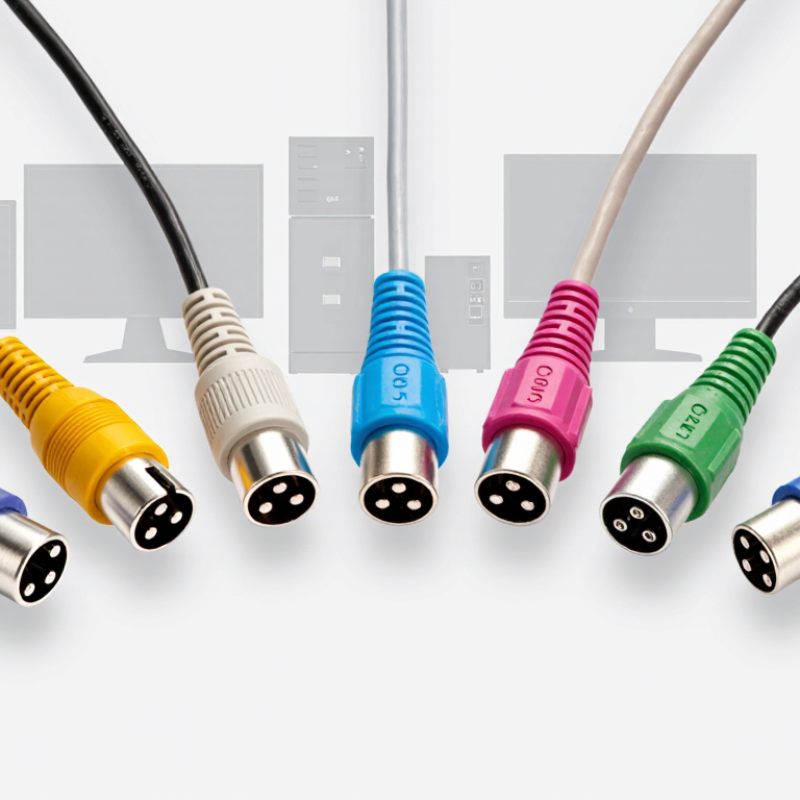
“IEC cable” is not one exact cable type. It is an informal label, often used for a detachable power lead with a standardized appliance connector, such as a C13 connector. The term can also describe cables designed to meet particular International Electrotechnical Commission standards. Context matters. A connector standard defines fit and interface details; a cable standard may specify voltage ratings, insulation, or conductor requirements.
For example, IEC 60320 covers appliance couplers, while IEC 60227 applies to certain PVC-insulated cables rated up to 450/750 volts. IEC 60502-1 covers power cables rated at 1 kV and 3 kV. These standards do not automatically certify an entire product or confirm it suits every installation. Check the marking, rated voltage, temperature range, and connector type against the equipment and operating conditions. Small details matter.
The need for dependable cable systems is growing. The International Energy Agency’s 2023 report, Electricity Grids and Secure Energy Transitions, says annual grid investment needs to rise to more than USD 600 billion by 2030, from about USD 300 billion. That figure concerns grids broadly, not IEC cables alone. Still, it shows why consistent technical specifications matter. A standard is a useful reference, not a substitute for checking the actual cable. Even experienced buyers can overlook that distinction.
“IEC cable” is an informal term, not the name of one universal cable design. IEC (the International Electrotechnical Commission) publishes standards covering cable construction, voltage ratings, testing, and performance. The applicable standard depends on the cable’s intended use and installation.
| Cable type / IEC reference | Typical design or rating | Common applications | Key selection point |
|---|---|---|---|
| PVC-insulated cable IEC 60227 series | PVC-insulated cables for rated voltages up to 450/750 V, depending on the cable type. | Building wiring and general low-voltage installations, where the specific cable construction is suitable. | Check the relevant part of the series, conductor flexibility, installation method, and temperature rating. |
| Rubber-insulated flexible cable IEC 60245 series | Rubber-insulated cables, including flexible types rated up to 450/750 V in covered designs. | Portable equipment, tools, and other applications that require a flexible cord or cable. | Confirm the cable type is intended for the expected mechanical stress, environment, and duty. |
| Low-voltage power cable IEC 60502-1 | Extruded-insulation power cables rated 1 kV or 3 kV (Um 1.2 kV or 3.6 kV). | Fixed power distribution in industrial, commercial, and utility installations. | Choose the correct conductor, insulation, sheath, and installation rating for the site conditions. |
| Medium-voltage power cable IEC 60502-2 | Extruded-insulation power cables rated from 6 kV to 30 kV (Um 7.2 kV to 36 kV). | Medium-voltage distribution networks and industrial power systems. | Cable accessories and installation practices must match the voltage class and cable construction. |
| High-voltage power cable IEC 60840 | Power cables and accessories rated above 30 kV up to 150 kV (Um 36 kV to 170 kV). | High-voltage transmission and sub-transmission systems. | Use a complete system designed and tested for the applicable voltage and installation conditions. |
| Extra-high-voltage power cable IEC 62067 | Power cables and accessories rated above 150 kV up to 500 kV (Um 170 kV to 550 kV). | Extra-high-voltage transmission links and major grid connections. | Project-specific design, testing, installation, and accessory coordination are essential. |
| Shipboard power and control cable IEC 60092-350 | General construction and test requirements for shipboard power, control, and Instrumentation Cables. | Electrical systems on ships and offshore units, where the applicable marine requirements call for it. | Verify the relevant IEC 60092 parts and any additional vessel or regulatory requirements. |
Important: IEC 60228 specifies conductor classes and sizes; it is commonly used alongside cable standards but is not, by itself, a cable type. Always check the exact standard edition, voltage rating, installation conditions, and applicable local regulations before selecting a cable.
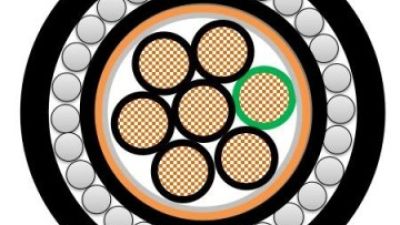
A 600V PVC-insulated armored control cable with copper braiding is designed to support dependable signal transmission in demanding industrial environments. Its PVC insulation helps separate and protect conductors, while the copper braid provides an additional shielding layer that helps reduce electrical interference and keep control signals steady. This is valuable in systems where sensors, instruments, and control equipment need to communicate consistently despite nearby machinery and electrical noise.
The armored construction adds mechanical protection against compressional deformation and other physical stresses that may occur during installation or operation. When a project requires a long control route, the cable may be suitable for direct burial, provided the installation follows the cable’s specifications and site requirements. Combining armor with braided screening can help protect both the cable’s physical integrity and the reliability of its signals, supporting stable connections for industrial equipment over extended distances.
It identifies the connector’s shape and intended connection. A C13 often mates with a C14 inlet. Check both ends.
No. Connector shape does not confirm electrical capacity. Compare the cable’s ratings with the equipment label.
Check its current, voltage, and temperature ratings. Jacket text may also show conductor size, such as 0.75 mm², and insulation material. Small print matters.
It describes cross-linked polyethylene insulation, not a connector type. It can suit higher operating temperatures in appropriate systems.
A three-contact connector usually includes protective earth. Some two-contact designs are made for double-insulated equipment. Check the equipment instructions.
Single-core cables suit some high-current routes; multicore cables group conductors together. Armored designs add mechanical protection. Each type has limits.
Flexible cables can serve moving or vibrating equipment, but they are not automatically right for fixed distribution. Fire-resistant designs may be specified when circuits must keep operating during a fire.
IEC 60228 addresses conductor construction. IEC 60502 covers power cables within defined voltage ranges. Check the applicable edition and project requirements.
Not always. Installation method, heat, moisture, and load can change the answer. A damp buried route is different from a ventilated room; I would double-check site details.
Iec Cable Meaning refers to a cable designed, tested, or identified according to applicable standards issued by the International Electrotechnical Commission. These standards help describe a cable’s construction, electrical performance, and intended use. Ratings and markings can indicate details such as voltage, conductor size, insulation, temperature range, and resistance to environmental conditions, helping users compare cables and select suitable options.
Common IEC cable types include power cables for electrical distribution; control and instrumentation cables for carrying signals; communication cables for data transmission; and flexible cables for applications that require movement. Armored cables offer added mechanical protection, while fire-resistant types are designed to maintain performance under specified fire conditions. Choosing the right cable means matching its ratings and construction to the application, installation environment, required flexibility, and expected electrical or signal demands.