Hesheng Cable
Leave Your Message
0%

Choosing a cable manufacturing leader for global supply isn’t just a purchasing decision—it’s a risk-management one. Reliable suppliers pull together engineering discipline, production capacity, testing systems, and responsive service. They also get that different markets may need different voltage ratings, sheath materials, certifications, and installation conditions.

Christopher Guérin, CEO of Nexans, put it like this: “Electrification is the backbone of the energy transition.” And that quote says a lot about the cable industry’s wider responsibility. A capable manufacturer has to support power distribution, renewable energy, industrial automation, infrastructure, and specialized applications. Take a professional supplier: it should produce Welding Cable with flexible copper conductors, durable insulation, and stable performance under repeated movement. Small details matter. A loose process can create big problems.

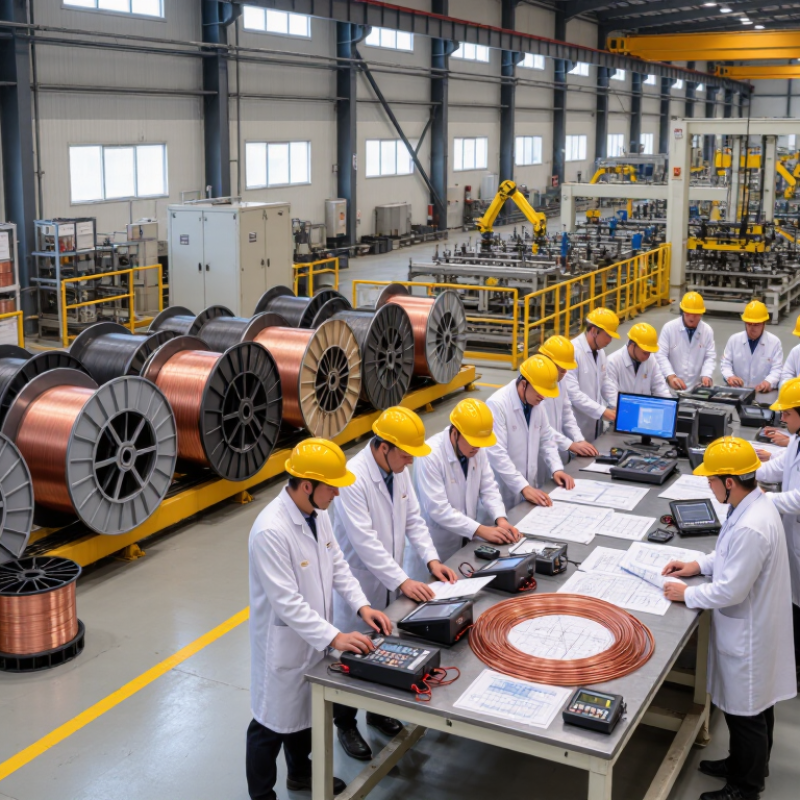
Experience shows up on the factory floor. Look for traceable raw materials, documented testing, calibrated equipment, and engineers who can explain their decisions clearly. A strong Cable Manufacturing Leader should offer samples, technical drawings, inspection records, and realistic delivery schedules. It should also keep communicating after shipment—not disappear once the payment lands.

No supplier is flawless. That’s actually important. Buyers should question lead times, verify quality claims, and review corrective-action procedures before signing long-term agreements. Global supply chains can run into material shortages, transport delays, and changing project requirements. A dependable manufacturer prepares for those pressures without making promises it can’t back up. The best partnership is measurable, transparent, and technically honest. That standard helps protect project performance across borders.
Why Choose a Cable Manufacturing Leader for Global Supply?

What Defines a Global Cable Manufacturing Leader

A global cable manufacturing leader is defined by more than production volume. It must convert technical standards into repeatable field performance. The International Energy Agency’s Electricity Grids and Secure Energy Transitions report estimates that annual grid investment must exceed 600 billion dollars by 2030. That pressure makes quality, capacity, and delivery discipline essential.

Strong manufacturers control materials from conductor selection to final drum inspection. They verify resistance, insulation thickness, voltage performance, and bending behavior through documented testing. Compliance with relevant IEC standards supports dependable international projects. Traceability matters too. A clear batch record can identify the source of a defect within hours, not weeks. The 2024 IRENA Renewable Capacity Statistics reported 473 gigawatts of renewable capacity added in 2023. More renewable power means more demanding cable routes, harsher environments, and tighter installation schedules. Experience helps, but it can also create blind spots. We still review near-misses, because “acceptable” is not always excellent.

Tips: Ask for recent test reports, production lead times, material traceability, and corrective-action records. Check whether capacity is proven during peak demand. Request samples before approving large shipments. A reliable supplier should explain limitations clearly, not hide them behind confident language. Supplier audits should examine laboratories, storage conditions, drum protection, and worker training. Small details matter. One damaged cable end can delay an entire site.

How Advanced Cable Engineering Supports International Projects

International projects demand more than a cable that passes a basic factory test. Advanced cable engineering connects electrical performance, installation conditions, and long-term reliability. A capable manufacturing leader studies voltage, load, temperature, moisture, bending radius, and route length before production begins.

For example, Xlpe Cable can support demanding power systems because cross-linked insulation offers strong thermal and electrical stability. Engineers may use thermal modeling to reduce overheating risks in crowded trays or underground ducts. They also review conductor size, shielding, fire performance, and compatible accessories. Each project needs evidence, including routine testing, material traceability, dimensional checks, and documented quality controls. Standards may differ by destination, so technical teams must confirm the correct requirements early. Small mistakes become expensive during international installation. Sometimes, a design looks perfect on paper but needs adjustment after site feedback.

Tips: Share complete project data before requesting a quotation. Include voltage, installation method, ambient temperature, soil conditions, delivery location, and required certifications. Ask for test records and inspection plans. Keep communication in writing. It helps prevent unclear assumptions.

Reliable suppliers also provide engineering support after production. They can clarify drum handling, joint preparation, pulling tension, and storage limits. Clear drawings help local contractors work safely and consistently. Still, no supplier can replace careful site supervision. Engineering decisions should be reviewed against real conditions, especially when weather, terrain, or installation practices differ from the original design.

Why Quality Control Matters in Global Cable Supply

Why Choose a Cable Manufacturing Leader for Global Supply?

Why Quality Control Matters in Global Cable Supply

Global cable supply depends on more than production capacity. It depends on repeatable quality at every stage.

Experienced manufacturers inspect incoming copper, insulation compounds, and protective materials before production begins. They verify conductor resistance, insulation thickness, tensile strength, and dimensional accuracy. These checks help prevent failures during installation and long-term operation.

Small defects can create expensive delays. A slightly uneven insulation layer may pass a quick visual check but fail under voltage testing. That is why reliable factories combine automated monitoring with trained technicians. Each production batch should carry traceable records, including test results, machine settings, and inspection times. Clear documentation supports purchasing teams, engineers, and quality auditors across different regions.

Testing must be practical. Samples should face electrical, mechanical, thermal, and environmental checks that reflect their intended use. Independent laboratory testing can add confidence when specifications are complex or shipments are large. Still, no factory is perfect. Equipment can drift, operators can miss signals, and procedures may need revision. Honest quality systems record these weaknesses instead of hiding them. Corrective actions, repeat testing, and periodic process reviews turn mistakes into measurable improvements.

A capable manufacturing leader also communicates early. If a material changes or a test result looks unusual, customers need facts quickly. Reliable supply is built through evidence, consistency, and careful attention to details that are easy to overlook.

Why Quality Control Matters in Global Cable Supply

Maximum conductor resistance for copper conductors, Class 1, at 20°C. Lower resistance supports efficient and reliable power transmission.

The reference values are based on IEC 60228 conductor-resistance requirements. During global cable supply, verifying conductor size and resistance helps maintain consistent electrical performance across production batches and export markets.

How Manufacturing Capacity Ensures Reliable Delivery

Choosing an experienced cable manufacturing leader can make global supply more predictable. Capacity is not only about factory size. It includes trained teams, tested equipment, stable materials, and clear production planning. A capable facility can run multiple lines for products such as Solar Cable without sacrificing inspection quality. This matters when projects require thousands of meters, consistent specifications, and strict delivery windows.

Reliable delivery begins with visibility. Production teams should track copper, insulation, connectors, and packaging before orders enter the line. Automated testing can check conductor resistance, insulation performance, and dimensional accuracy. Batch records also support traceability during international shipping. In practice, reserve capacity helps absorb urgent orders or temporary equipment maintenance. No plan is flawless. A small forecasting error can still affect schedules, especially during seasonal demand.

Tips: Ask how capacity is measured, not simply advertised. Review lead-time records, testing procedures, and material backup plans. Confirm whether the manufacturer can provide samples before mass production. Check packaging details too; damaged coils create delays at the destination. Request realistic timelines with milestone updates. Honest communication is often more valuable than a short promise.

Why Choose a Cable Manufacturing Leader for Global Supply? - How Manufacturing Capacity Ensures Reliable Delivery
Capacity and Delivery Dimension Data or Benchmark How It Supports Reliable Global Supply Calculation or Reference Basis
Maximum continuous operating time 168 hours per week Provides a clear reference for evaluating production availability when a facility operates continuously on a 24/7 schedule. 24 hours × 7 days = 168 hours. Actual operating time depends on maintenance, staffing, changeovers, and local regulations.
Annual production calendar 365 days in a standard year Supports annual capacity planning, production-slot allocation, and shipment scheduling across multiple regions. A leap year contains 366 days. Planned shutdowns and holidays must be deducted from available production time.
Overall Equipment Effectiveness (OEE) Availability × Performance × Quality Combines machine uptime, production speed, and conforming output into one capacity-management indicator. OEE is a widely used manufacturing metric. It should be calculated from actual production records rather than equipment nameplate capacity.
Multi-line production redundancy N+1 capacity model Allows planned production to continue if one line is unavailable for maintenance, tooling changes, or corrective action. N+1 means one additional capable production resource beyond the number required to meet the planned load.
Capacity utilization Demand ÷ Available Capacity × 100% Reveals whether a supplier has room to absorb urgent orders, seasonal peaks, or demand growth. For example, 700 tonnes of annual demand against 1,000 tonnes of available capacity equals 70% utilization.
Production changeover control Planned by product family and specification Reduces lost hours caused by conductor, insulation, color, diameter, or packaging changes. Changeover time is a real capacity constraint and should be included in the production schedule instead of using theoretical machine speed alone.
On-time, in-full delivery OTIF = On-time and complete orders ÷ Total orders × 100% Measures whether shipments arrive by the agreed date and contain the complete confirmed quantity. OTIF is a standard supply-chain performance calculation; order-date, quantity, and delivery records are required for verification.
Safety-stock coverage Inventory ÷ Average daily demand Expresses how many days of demand can be covered while production, transport, or customs issues are being resolved. Example: 120 tonnes of usable inventory ÷ 4 tonnes of average daily demand = 30 days of coverage.
Global shipment planning Production completion + documentation + transport + customs buffer Separates manufacturing lead time from transit and import processes, creating more realistic delivery commitments. Actual transit time varies by destination, transport mode, port conditions, customs processing, and seasonal congestion.
Conductor classification IEC 60228 Classes 1, 2, 5, and 6 Creates a consistent technical basis for comparing solid, stranded, flexible, and highly flexible conductors. IEC 60228 specifies conductor classes and requirements for conductors used in insulated cables.
Quality management system ISO 9001:2015 framework Supports controlled processes, documented corrective actions, traceability, customer requirements review, and continual improvement. Certification status must be verified through a valid certificate issued by an accredited certification body.
Restricted-substance compliance RoHS Directive 2011/65/EU and REACH Regulation (EC) No. 1907/2006 Helps global buyers manage material declarations, restricted substances, and market-access requirements. Applicable obligations depend on product type, destination market, exemptions, and the latest legal amendments.
Production traceability Raw material lot → production batch → inspection record → shipment Enables faster root-cause analysis, targeted containment, and controlled handling of nonconforming product. Traceability is most effective when batch codes, test results, material certificates, and shipping records are linked.
Capacity expansion readiness Reserved equipment, labor, tooling, and supplier inputs Reduces the time needed to increase output when project schedules accelerate or regional demand rises. Expansion readiness should be confirmed with documented production plans, equipment availability, workforce capacity, and component supply.

The Role of Certifications in Cross-Border Cable Procurement

Why Choose a Cable Manufacturing Leader for Global Supply?

The Role of Certifications in Cross-Border Cable Procurement

Cross-border cable procurement depends on more than price and production capacity. A qualified manufacturer should provide current certificates, test reports, and traceable batch records. These documents help buyers confirm that a Four Core Cable meets the required electrical, mechanical, and safety specifications.

Certifications such as ISO 9001 can indicate controlled quality processes, while product standards may address insulation, conductor performance, fire behavior, or environmental conditions. However, certification is never a complete guarantee. Its scope, issue date, testing laboratory, and covered product range require careful review. A certificate for one cable design may not cover another. That detail is often missed.

Experienced suppliers also support practical compliance work. They can prepare declarations, packing information, customs documents, and material data before shipment. During factory evaluations, buyers should inspect calibration labels, conductor storage, extrusion records, and final testing procedures. A reliable team should explain these steps clearly, not hide behind paperwork. Good communication matters when voltage ratings, jacket materials, or destination rules change.

There are weak points, too. Some documents may be translated poorly or updated late. A supplier can have strong systems and still make an isolated production error. Independent testing, sample approval, and clear acceptance criteria reduce that risk. Buyers should record every revision and verify that shipped cable matches the approved sample. Small differences can create costly delays.

How a Global Supplier Builds Long-Term Customer Value

Global supply is not built by shipping boxes faster. It grows through repeatable quality, visible processes, and useful communication. A reliable cable manufacturing leader maps each stage, from conductor preparation to final drum inspection. For an Instrumentation Cable order, engineers should review shielding, insulation, temperature range, and installation conditions before production. Small details matter. A clear drawing revision can prevent weeks of rework.

Long-term value also depends on evidence. Factory teams can retain test records, material certificates, batch numbers, and inspection photos for every shipment. Customers gain more than cable; they gain traceability when projects cross borders. Technical specialists should explain tolerances in practical language, not hide behind complex terms. When specifications change, an experienced supplier confirms the impact on cost, lead time, and field performance. That honesty protects planning.

Good partnerships include service after delivery. A responsive team helps investigate damaged packaging, unexpected routing issues, or questions from installers. Not every project runs perfectly. A missed detail can reveal a weak approval step or an unclear handoff. The best suppliers treat that lesson as process data, then improve drawings, checklists, and training. Over time, consistent quality, realistic promises, and accessible expertise reduce operational risk. That is how global supply becomes lasting customer value.

1500V PV/PV1-F TUV Tinned Copper XLPO Solar Cable for Reliable Solar Power Systems

The 1500V PV/PV1-F TUV Tinned Copper XLPO Solar Cable is designed for reliable connections in modern solar power systems. It links photovoltaic panels to inverters, combiner boxes, and other equipment both inside and outside buildings, supporting stable energy transmission in residential, commercial, and utility-scale installations. Its tinned copper conductor offers excellent conductivity while helping resist oxidation and corrosion, making it suitable for long-term outdoor use.

With XLPO insulation and a durable outer layer, this solar cable is engineered to withstand sunlight, temperature changes, moisture, and demanding weather conditions. It can perform in environments exposed to heat, cold, rain, and ultraviolet radiation, helping maintain dependable operation throughout the service life of a solar installation. The 1500V rating also supports efficient high-voltage system designs by allowing secure power transmission with reduced energy loss.

The PV/PV1-F construction provides flexibility for routing around panels, mounting structures, and electrical enclosures. Its robust design simplifies installation while offering dependable protection against mechanical stress and common outdoor operating conditions. Whether used between rooftop modules or across large ground-mounted arrays, this cable provides a practical connection solution for durable and efficient solar power systems.

FAQS

What information should engineers review before designing a cable system?

They should review voltage, load, temperature, moisture, bending radius, route length, and installation conditions. Soil and terrain also matter. Details matter.

How can thermal modeling improve cable reliability?

Thermal modeling can identify overheating risks in crowded trays or underground ducts. It helps engineers adjust conductor size and spacing. Models are useful, but site conditions may still require changes.

What quality evidence should an international cable project request?

Request routine test records, material certificates, dimensional checks, inspection plans, and batch traceability. These documents support consistent quality across borders. Paperwork alone is not proof.

How can a buyer improve delivery planning?

Share complete project data before requesting a quotation. Include delivery location, certifications, installation method, and required quantities. Ask for milestone updates and realistic timelines.

Why does manufacturing capacity affect project schedules?

Capacity includes trained teams, tested equipment, stable materials, and production planning. Reserve capacity can absorb urgent orders or temporary maintenance. Factory size alone proves little.

What should buyers check before approving mass production?

Ask for samples, lead-time records, testing procedures, packaging details, and material backup plans. Confirm that samples match the final specifications. Small differences can create delays.

What support should suppliers provide after production?

They should explain drum handling, storage limits, pulling tension, joint preparation, and installation drawings. Responsive technical support can help local contractors work consistently. Supervision remains necessary.

How can suppliers create long-term customer value?

They can retain test records, inspection photos, batch numbers, and material certificates for each shipment. They should explain tolerances in practical language. Mistakes happen. Good suppliers study them and improve checklists, drawings, and training.

Conclusion

Choosing a Cable Manufacturing Leader for global supply means selecting a partner with the engineering expertise, production strength, and quality systems needed to support complex international projects. A true leader develops cable solutions for different environments, applications, and performance requirements while maintaining consistent standards across every production stage. Advanced engineering helps ensure suitable materials, reliable construction, and efficient designs that can perform safely and consistently in demanding conditions.

Quality control is equally important, as thorough testing and documented procedures reduce risks during cross-border procurement. Strong manufacturing capacity supports stable output, flexible scheduling, and dependable delivery, even when project volumes or specifications change. Recognized certifications also provide confidence that products meet relevant technical and quality expectations in different markets. Beyond supplying cable, a global partner creates long-term customer value through responsive communication, technical support, continuous improvement, and dependable after-sales service. This combination enables customers to manage international projects more efficiently and build lasting supply relationships.
Grayson

Grayson

Grayson is a dedicated marketing professional at Henan Hesong Cable Co., Ltd., where he plays a vital role in driving the company's outreach and engagement. With a deep understanding of the cable industry, Grayson possesses extensive knowledge about the company's products, which include a wide......
Previous What Are the Top 10 Crane Cable Suppliers?