Hesheng Cable
Leave Your Message
0%

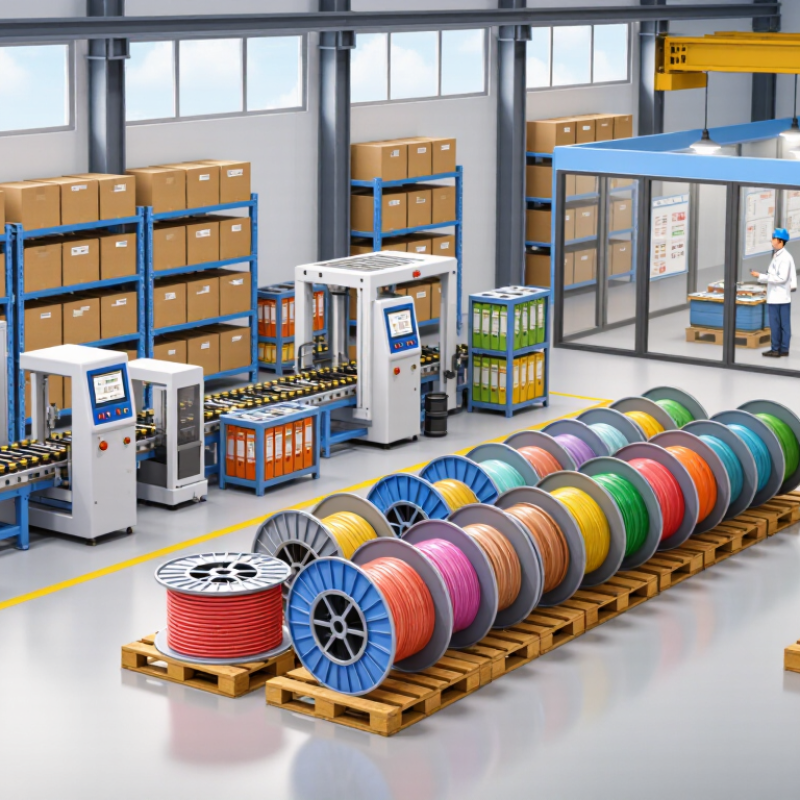
So picking a top-tier electrical cable factory isn't just about getting the best price, you know? The way they run things behind the scenes really matters—it can make or break cable consistency, mess with delivery schedules, and even determine how much help you get when a spec suddenly changes. As a buyer, you want to see clear product specs, proof of quality checks, and get answers that actually relate to what you're using the cables for.

Honestly, the details are where it’s at. Don’t just skim the specs — ask exactly how the conductors and insulation are specified, how they track production batches, and what inspection paperwork actually comes with the order. And if you’re looking at a 4mm Electrical Cable, make sure you know what it’s for, where it’ll be installed, and what technical requirements apply before you start comparing prices. Honestly, a good supplier should be willing to walk you through their testing process and actually back it up with paperwork—not just throw around vague claims about quality. And you definitely want to see things like sample approval, packaging specifics, and lead times in writing. If they can’t do that, it’s kind of a red flag.

Sure, visiting the factory or going through their production process in detail can give you a better sense of things—but honestly, it doesn't replace actual records you can verify. Keep an eye out for labels that are consistent, materials stored in an orderly way, and testing equipment that's properly calibrated, if that applies. Then, take what you see and compare it to what they say they do. Just remember, not every factory is going to give you the same level of detail, and a slick presentation doesn't really prove anything on its own. Worth keeping in mind. Product needs are all over the map, honestly, so the best cable for one job might be totally wrong for another. It all comes down to the application, the specs you're dealing with, and whether you'll need a steady supply down the road. Ask the right questions early—that's how you spot the good stuff and the weak spots before you commit. And a solid partnership? That's built on proof, real expectations, and communication that doesn't just stop once the quote's been sent.
Why Choose a Top Electrical Cable Factory?

How IEC 60228 Defines 4 Conductor Classes for Cable Selection

Why Choose a Top Electrical Cable Factory?

IEC 60228 gives buyers a practical way to compare conductor construction. It defines four classes: Class 1 solid, Class 2 stranded, Class 5 flexible, and Class 6 extra-flexible. These classes describe the conductor, not the complete cable’s performance. A class number is not a simple quality score.

Class 1 conductors suit fixed installations where movement is limited. Class 2 uses multiple strands and is also intended mainly for fixed wiring. Classes 5 and 6 use finer strands for applications that need more flexibility, such as equipment connections or cables routed through tight spaces. Class 6 is generally more flexible than Class 5. Not interchangeable.

For a 16mm Electrical Cable, check the conductor class alongside its stated resistance and nominal cross-sectional area. A flexible conductor may be easier to route, but it still needs suitable terminals and installation conditions. Resistance limits help verify electrical performance; they do not alone determine a cable’s safe current capacity. That depends on other factors, including insulation, ambient temperature, and installation method. It is easy to focus on the size printed on a label and miss these details. Confirm the applicable specification and test documentation before selecting a cable.

How IEC 60502-1 Covers 0.6/1 kV and 1.8/3 kV Cable Ratings

IEC 60502-1:2021 covers extruded-insulation power cables rated 0.6/1 kV and 1.8/3 kV. The IEC publication defines U0 as voltage to earth, U as voltage between conductors, and Um as the highest system voltage. For these ratings, the corresponding Um values are 1.2 kV and 3.6 kV. These figures are not just catalogue shorthand.

For a Single Core Electrical Cable, the installation’s earthing arrangement and operating voltage matter when selecting the rating. A cable marked 0.6/1 kV is not automatically suitable for every system near 1 kV. Check the system voltage, fault conditions, installation method, and the manufacturer’s declared construction against IEC 60502-1 requirements. The standard also sets construction and testing provisions, so comparing voltage labels alone misses important details. Small print matters.

A top electrical cable factory should provide traceable test documentation, clear conductor and insulation specifications, and consistent production records. Ask for the applicable standard edition and routine test results, not just a certificate image. It is easy to assume two cables with matching ratings perform identically; that assumption needs checking. Ambient temperature, grouping, and installation conditions can change the practical current capacity, even when the voltage class matches.

Why 100% IACS at 20°C Is a Key Copper Conductivity Benchmark

At 20°C, 100% IACS represents the conductivity of standard annealed copper, approximately 58 MS/m. The temperature matters because copper resistance rises as it gets warmer. Comparing measurements at different temperatures can make good material look inconsistent. That number matters.

For a cable factory, conductivity is more than a figure on a specification sheet. Drawing and annealing affect the conductor’s structure, so process control helps keep resistance consistent between production lots. A useful quality check measures conductor samples under controlled conditions and records the result alongside dimensions and test temperature. Small differences add up. In long cable runs, higher resistance can mean greater voltage drop and more heat under load.

Still, IACS is not the whole story. It does not confirm insulation quality, conductor flexibility, or finished-cable performance by itself. A factory should explain how it tests samples and how results connect to the cable’s stated resistance. It is easy to focus on reaching 100% and overlook repeatability. That is worth questioning. A clear test report, consistent production data, and realistic technical answers offer a stronger basis for choosing a supplier than one headline number alone.

How ISO 9001:2015 Supports Consistent Cable Factory Quality Control

A top electrical cable factory uses ISO 9001:2015 to make quality control repeatable, not to replace product testing. The standard requires documented processes, clear responsibilities, calibrated measurement equipment, and corrective action when results fall outside limits. ISO’s 2022 Survey of Certifications recorded 1,265,216 ISO 9001 certificates across 189 countries and economies. That figure shows the system’s broad use, but certification alone does not prove that every cable meets its specification. That distinction matters.

On an extrusion line, operators can record melt temperature, line speed, and conductor preheating conditions. Calibrated gauges check insulation thickness and eccentricity, while drum records link each batch to material lots and test results. If a spark test detects a fault, a controlled process should hold the affected length, investigate the cause, and document the disposition. Small details matter. The International Energy Agency’s 2023 report, Electricity Grids and Secure Energy Transitions, said annual grid investment needs to rise from about $300 billion to more than $600 billion by 2030. That growth makes dependable cable production increasingly important. Still, records can become paperwork if managers do not review trends or listen to line operators. A standard helps; disciplined daily practice makes it useful.

Why Choose a Top Electrical Cable Factory? - How ISO 9001:2015 Supports Consistent Cable Factory Quality Control
Production Stage Representative Quality Control Example Check or Frequency Quality Record Relevant ISO 9001:2015 Focus
Incoming materials Verify conductor, insulation, and sheath materials against approved purchasing and product requirements. Check material identification and supplier documents for each delivery; perform additional testing when required by the control plan. Receiving inspection, material certificates, supplier evaluation records Control of externally provided processes, products, and services (Clause 8.4)
Conductor drawing and stranding Monitor conductor dimensions, construction, and electrical resistance against the applicable product specification. Use calibrated measuring or test equipment at defined production intervals and for final verification as specified in the inspection plan. Process inspection results, equipment identification, batch and work-order records Controlled production and monitoring resources (Clauses 7.1.5 and 8.5)
Insulation extrusion Check insulation appearance, concentricity, and wall thickness; monitor extrusion conditions. Visual and dimensional checks at planned intervals; acceptance limits are defined by the applicable cable specification. In-process inspection sheets, production parameters, operator and line details Controlled production conditions and documented information (Clause 8.5)
In-process electrical testing Use an appropriate in-line test, such as a spark test, where required for the cable design and manufacturing process. Continuous monitoring may be used during applicable insulation processes; test setup and response to failures are controlled. Test equipment status, line checks, alarms, and corrective actions Monitoring and measurement; control of nonconforming outputs (Clauses 9.1 and 8.7)
Final inspection and testing Verify specified dimensions, marking, construction, and required electrical or mechanical test results. Test each production lot or sample according to the approved inspection and test plan, customer requirements, and applicable product standard. Final inspection report, test results, product specification, release authorization Product release based on planned verification arrangements (Clause 8.6)
Calibration and measurement equipment Maintain suitable equipment and verify or calibrate it against traceable standards where applicable. Follow a defined calibration or verification schedule; identify equipment status and assess potentially affected results if equipment is found unsuitable. Calibration certificates, due-date records, equipment status and impact assessments Resources for monitoring and measurement (Clause 7.1.5)
Identification and traceability Link finished cable to its production order, material lots, test records, and product marking where required. Check identification during production and before dispatch; traceability depth depends on customer and regulatory requirements. Batch records, reel labels, inspection history, dispatch documents Identification, traceability, and control of documented information (Clauses 8.5 and 7.5)
Nonconformity and corrective action Identify, segregate, evaluate, and disposition cable that does not meet specified requirements; investigate recurring issues. Record each identified nonconformity and verify corrective-action effectiveness when action is required. Nonconformity reports, disposition approvals, root-cause and follow-up records Control of nonconforming outputs and corrective action (Clauses 8.7 and 10.2)

The checks above are representative examples, not universal acceptance limits or mandatory test frequencies. Actual criteria and sampling plans should follow the cable design, applicable product standards, customer requirements, and the factory’s documented quality controls. ISO 9001:2015 specifies quality management system requirements; it does not by itself certify individual cable products.

What the 1 kW IEC 60332-1-2 Flame Test Measures

A 1 kW IEC 60332-1-2 flame test checks how a single vertical insulated cable responds to a defined flame. A burner applies a premixed flame with a nominal heat output of 1 kW. The test then assesses flame spread and whether the cable meets the standard’s specified performance criteria. It is a controlled test, not a simulation of every fire.

For a cable factory, consistent sample preparation and careful test records matter. Small differences in specimen placement or flame application can affect observations. The test does not show that a cable is fireproof, nor does it predict how several cables will behave in a bundle. That distinction matters. A report should identify the tested cable construction and applicable method, so buyers can judge what the result actually covers.

When reviewing products such as 3 Core Electrical Cable 2.5 Mm, check that the test evidence matches the cable type and intended use. A passing result is useful, but it is only one part of product assessment. Honestly, a neat certificate can feel more conclusive than it is. Construction details, installation conditions, and other relevant test data still deserve attention.

Why Choose a Top Electrical Cable Factory?

What the 1 kW IEC 60332-1-2 Flame Test Measures

IEC 60332-1-2 specifies a 1 kW flame test for a single vertically mounted insulated wire or cable. The required flame application time depends on the cable’s overall diameter. The test assesses vertical flame propagation; it does not by itself indicate performance in every fire scenario.

How Routine Tests on Each Cable Length Verify Product Compliance

Why Choose a Top Electrical Cable Factory?

A top electrical cable factory tests each manufactured length, not merely a sample from the production run. For applicable power cables, IEC 60502-1:2021 describes routine tests such as conductor resistance measurement and voltage testing. These checks can reveal a high-resistance conductor or insulation weakness before a reel ships. Each result should link to a cable length, production date, and test record. Small details matter.

IEC 60228:2023 lists a maximum conductor resistance of 7.41 Ω/km at 20°C for a 2.5 mm² copper conductor in class 2. A factory can compare measured resistance with the applicable limit, correcting for temperature where required. This is useful for a 3 Wire Electrical Cable, where consistent conductors help maintain predictable performance. Test results do not prove every aspect of installation quality, though. A neat report can still miss a handling issue after testing; that deserves attention too.

Tips: Ask for the routine-test record tied to the exact cable length. Check the test date, measured values, and acceptance limits. Keep the reel label with the paperwork.

600V Aluminum vs. Copper SEU Cable: A Selection Guide Informed by NFPA’s Home Structure Fires Report

Choosing 600V aluminum or copper Seu Cable begins with the installation’s electrical load, conductor size, termination ratings, and approved wiring method—not with the metal alone. NFPA’s *Home Structure Fires* report estimates that U.S. fire departments responded to an average of 358,500 home structure fires annually from 2015 to 2019, resulting in 2,620 civilian deaths, 11,070 injuries, and $7.3 billion in direct property damage. These figures describe the broad home-fire burden; they do not establish that one conductor material is inherently safer. Correct sizing, compatible terminations, sound installation, and appropriate overcurrent protection are central considerations for either option.

Type SE, Style SEU cable is primarily used to carry power from the service drop to the meter base and from the meter base to the distribution panelboard, and may serve other applications where Type SE cable is permitted. Aluminum is lighter and can be a cost-effective choice, but its required conductor size and fittings must match the load and cable listing. Copper offers greater conductivity for a given conductor size, though material cost and weight may be higher. The referenced product specification gives a 600-volt rating and permits use in wet or dry locations at temperatures up to 90°C; verify the exact cable marking, installation conditions, terminal temperature ratings, and applicable requirements before selection.

FAQS

What does 100% IACS mean at 20°C?

It represents standard annealed copper conductivity, about 58 MS/m. Temperature matters.

Why must conductivity tests record temperature?

Copper resistance rises as it warms. Testing at different temperatures can make similar material appear inconsistent.

How can factory processes affect conductor conductivity?

Drawing and annealing change the conductor’s structure. Stable process controls help keep resistance consistent between production lots.

What details should a useful conductor test report include?

It should record sample dimensions, test temperature, and measured results. Clear methods make comparisons more meaningful.

Why does conductor resistance matter in long cable runs?

Higher resistance can increase voltage drop and heat under load. Small differences add up.

Does a 100% IACS result prove a finished cable is high quality?

No. It does not confirm insulation quality, flexibility, or finished-cable performance by itself.

How does a quality management system support consistent cable production?

It documents responsibilities, processes, calibrated equipment, and corrective actions. Daily review matters more than paperwork alone.

What should happen when a spark test finds a fault?

The affected cable length should be held while the cause is investigated and documented. Records should connect batches with materials and test results.

Does factory certification guarantee that every cable meets its specification?

No. Certification supports repeatable processes, but product testing is still necessary. A tidy certificate can leave questions unanswered.

Conclusion

Choosing a Top electrical cable factory means looking beyond price to the standards and checks that support dependable cable selection. IEC 60228 classifies conductors into four classes, helping buyers match conductor flexibility and construction to an application. IEC 60502-1 covers cables rated at 0.6/1 kV and 1.8/3 kV, providing a framework for selecting suitable power cables. For copper conductors, 100% IACS at 20°C is a useful benchmark for electrical conductivity and material performance.

Consistent production also depends on effective quality systems and testing. ISO 9001:2015 supports documented processes and ongoing quality control throughout factory operations. The IEC 60332-1-2 flame test applies a 1 kW flame to assess how a single cable responds to fire exposure, including flame spread. In addition, routine tests on each cable length can verify key electrical and construction requirements before dispatch. Together, these standards and checks help customers assess whether a cable is appropriate, consistently manufactured, and compliant with its stated specifications.

Aiden

Aiden

Aiden is a dedicated marketing professional at Henan Hesong Cable Co., Ltd., where he leverages his extensive knowledge of the cable industry to drive product awareness and customer engagement. With a strong background in engineering and business, Aiden has developed a keen understanding of the......
Previous What Does IEC Cable Mean 7 Best Types Explained?