Hesheng Cable

Leave Your Message
When you're picking a professional cable manufacturer, it's really about safety, uptime, and what things cost in the long run—not just the price per meter. The right cable should actually fit the job, whether that's a fixed industrial setup or something like a Welding Cable sitting right next to a busy workbench. You should be asking questions like where the conductors come from, how they control the insulation, and what kind of test records each batch has. Honestly, the details are where it counts.
Listen, the stakes are rising. The International Energy Agency’s 2023 report—Electricity Grids and Secure Energy Transitions—makes it pretty clear: we need to be spending over $600 billion a year on grids by 2030 to meet global demand. Now, that’s no guarantee every cable type will suddenly see a surge, but it does point to how much dependable supply and steady manufacturing matter. So what’s the practical takeaway? Ask for traceable test records, clear specs, and realistic lead times. Because a supplier can pass an audit with flying colors and still blow the delivery window.
You hear “quality” thrown around all the time, but honestly, it’s not just a slogan. W. Edwards Deming—the guy who basically pioneered manufacturing quality—put it plainly: “Quality is everyone’s responsibility.” For cable buyers, that means you can’t just look at a certificate and call it done. You’ve got to make sure the product really matches the construction and operating conditions you need. Compare samples, flip through the documentation, and think about after-sales support too. Then—and only then—compare the price. The cheapest quote might seem tempting, but it could end up being the wrong choice. Look, no manufacturer is perfect, right? Buyers should really dig into how things actually perform instead of just buying into the glossy promises. And a good supplier? They earn trust by showing proof, keeping communication clear, and delivering the same solid results time after time.
What Defines a Professional Cable Manufacturer?
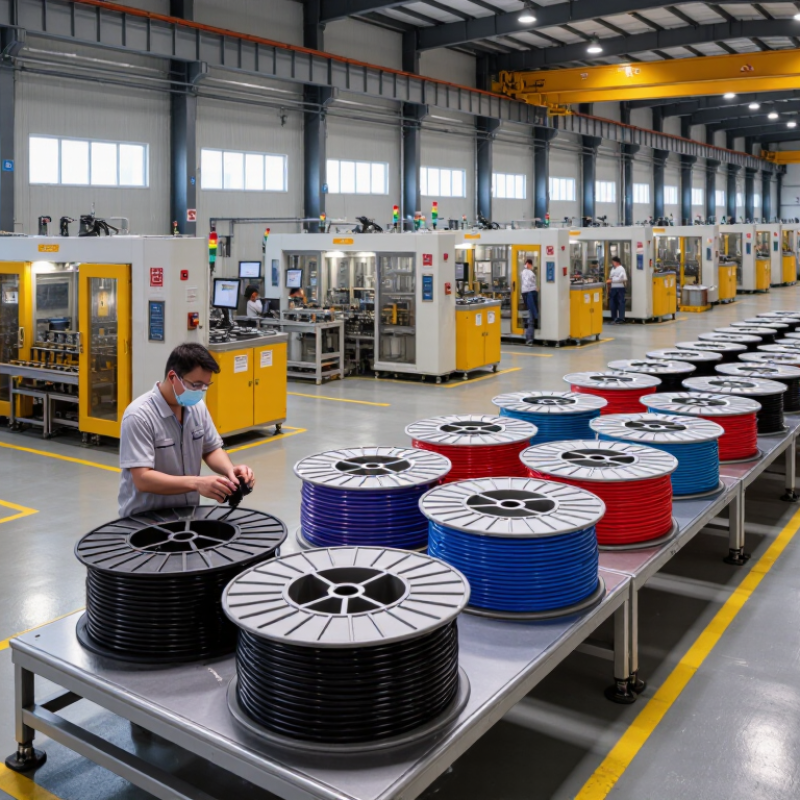
A professional cable manufacturer is defined less by a polished catalogue than by repeatable evidence. It can show how conductors, insulation, and finished cables are checked at each production stage. For example, test records should identify the cable batch, test conditions, and measuring equipment. Details matter. The International Energy Agency’s 2023 report, Electricity Grids and Secure Energy Transitions, estimates that 80 million kilometres of grids must be added or refurbished by 2040. That scale makes consistent cable quality essential.
Strong manufacturers maintain documented process controls and traceable materials. They verify conductor resistance, insulation dimensions, and performance against relevant technical specifications, using calibrated equipment. They should also explain test results clearly, not just provide a certificate without context. A neat report is useful, but it cannot replace sound production. Buyers can ask how nonconforming batches are handled and whether test records can be linked to delivered cable drums.
Professional capability also includes honest limits. No factory test can remove every risk created by poor storage, installation, or site conditions. The IEA report says annual grid investment needs to exceed 600 billion US dollars by 2030, underscoring the importance of dependable supply and quality assurance. Still, impressive capacity figures alone prove little. Look for transparent test methods, consistent documentation, and answers that acknowledge what testing can—and cannot—guarantee.
| Evaluation Area | Professional Manufacturer Indicator | Why It Matters | What to Verify |
|---|---|---|---|
| Product standards | Identifies the standards and ratings that apply to each cable type, such as conductor, insulation, voltage, and intended-use requirements. | Standards help define product performance and test methods; the applicable standard depends on the cable design and market. | Request the standard number and edition, product datasheet, and evidence that the offered construction is within its scope. |
| Conductor specification | States conductor material, construction, nominal cross-sectional area, and applicable requirements such as those in IEC 60228. | Conductor construction and resistance affect electrical performance and suitability for the intended installation. | Check the datasheet and test records for conductor details and the applicable resistance requirements. |
| Testing and inspection | Defines inspection and testing stages, including the routine, sample, or type tests required by the relevant product standard. | Documented testing provides evidence that the cable has been assessed against specified requirements. | Ask for the test plan, sample test reports, and shipment-specific inspection or test records where applicable. |
| Certification and scope | Provides verifiable certificates or product approvals when required for the product and destination market. | A certificate or listing applies only to its stated scope, products, and conditions; it should not be assumed to cover every cable. | Check the issuing body, validity, certificate scope, product model, and applicable market requirements. |
| Quality management | Uses documented quality processes, with responsibilities and controls for production, inspection, nonconformities, and corrective actions. | Consistent processes support repeatability and make quality issues easier to investigate and address. | If ISO 9001 certification is claimed, verify the certificate’s validity, certified site, and scope. |
| Material traceability | Can link production records to relevant material batches and finished-product identification. | Traceability helps narrow investigations if a material or product issue arises. | Ask how batch or drum identification connects to production and inspection records. |
| Technical documentation | Supplies clear datasheets, construction details, ratings, applicable standards, and handling or installation information. | Complete, consistent documentation helps buyers, engineers, and installers assess whether a cable suits the application. | Compare the quotation, datasheet, drawings, and order documents for matching construction and ratings. |
| Manufacturing capability | Explains which cable constructions and production processes it can support, and confirms capability against the requested specification. | Capability should be assessed against the actual design, quantity, tolerances, and delivery requirements—not assumed from a general product list. | Request a technical review of the specification, production plan, and any limits or deviations before placing an order. |
| Change control | Communicates material or design changes that may affect the agreed product specification. | Unreviewed changes can create differences between the approved design and the supplied cable. | Confirm how substitutions and specification changes are approved and recorded. |
| After-sales support | Provides a clear process for technical questions, document requests, and handling reported product issues. | Responsive support helps buyers obtain information needed for installation, maintenance, or investigation. | Confirm support contacts, expected response process, and the information required to investigate a concern. |
Designed for modern radio base stations, 3G/4G/5G 600V tinned copper-braided shielded DC square RRU power cables provide a dependable connection for remote radio units. Although rated for up to 600V, they are commonly used to deliver 48V DC power to RRUs in outdoor and indoor installations. Their square profile supports orderly routing in equipment spaces, while the tinned copper braid offers shielding against electromagnetic disturbances that could affect nearby communication and power equipment.
RRUs typically connect to controllers through optical links, while a dedicated power cable supplies the unit with stable DC energy. The braided shield helps reduce interference around the power connection, supporting reliable operation in base-station environments carrying 3G, 4G, 5G, and 5.5G services. Suitable cable construction and insulation can also help withstand the practical demands of installation, including routine handling and exposure to site conditions. When selecting a cable, check that its voltage rating, conductor size, flexibility, and environmental protection match the installation requirements.
The conductor, insulation, and jacket must suit the voltage and installation environment. Copper provides stable conductivity, while aluminum can reduce weight. Small choices matter.
Checks may cover conductor diameter, insulation thickness, strand arrangement, and extrusion conditions. Samples can also be tested for electrical performance and physical strength. No check catches everything.
Request current reports that identify the tested cable type and applicable requirements. Match the rated voltage, temperature range, and construction to the project drawings.
Sunlight, moisture, heat, and repeated temperature changes can stress insulation. Abrasion and frequent bending may also matter. A rooftop is not a gentle place.
No. Tests assess performance under controlled conditions, but installation quality, connector compatibility, and site conditions still affect results. We can miss details, too.
Ask for material traceability, production records, and test results for each relevant batch. Clear acceptance criteria and calibrated instruments make those records more useful.
Share demand forecasts early and confirm lead times in writing. Keep approved drawings and test records available to site teams. Plans change.
Ask how changes to materials, specifications, or schedules are assessed and communicated. Review forecasts at project milestones, and record agreed updates. Promises alone are thin evidence.
Choosing a Professional cable manufacturer means working with a partner that combines engineering knowledge, disciplined production, and dependable communication. Experienced engineers can translate application requirements into practical cable designs, while careful selection of conductors, insulation, and protective materials helps ensure consistent performance. Controlled manufacturing processes, inspection, and testing provide evidence that each cable meets its intended specifications and performs reliably under expected operating conditions.
A capable manufacturer can also adapt designs to specific installation and environmental needs rather than relying on a one-size-fits-all solution. Clear traceability and responsive technical support make it easier to identify requirements, address questions, and manage project risks. For long-term programs, reliable supply planning helps maintain continuity as needs change over time. Together, these capabilities support informed decisions and confidence throughout a cable’s service life.